
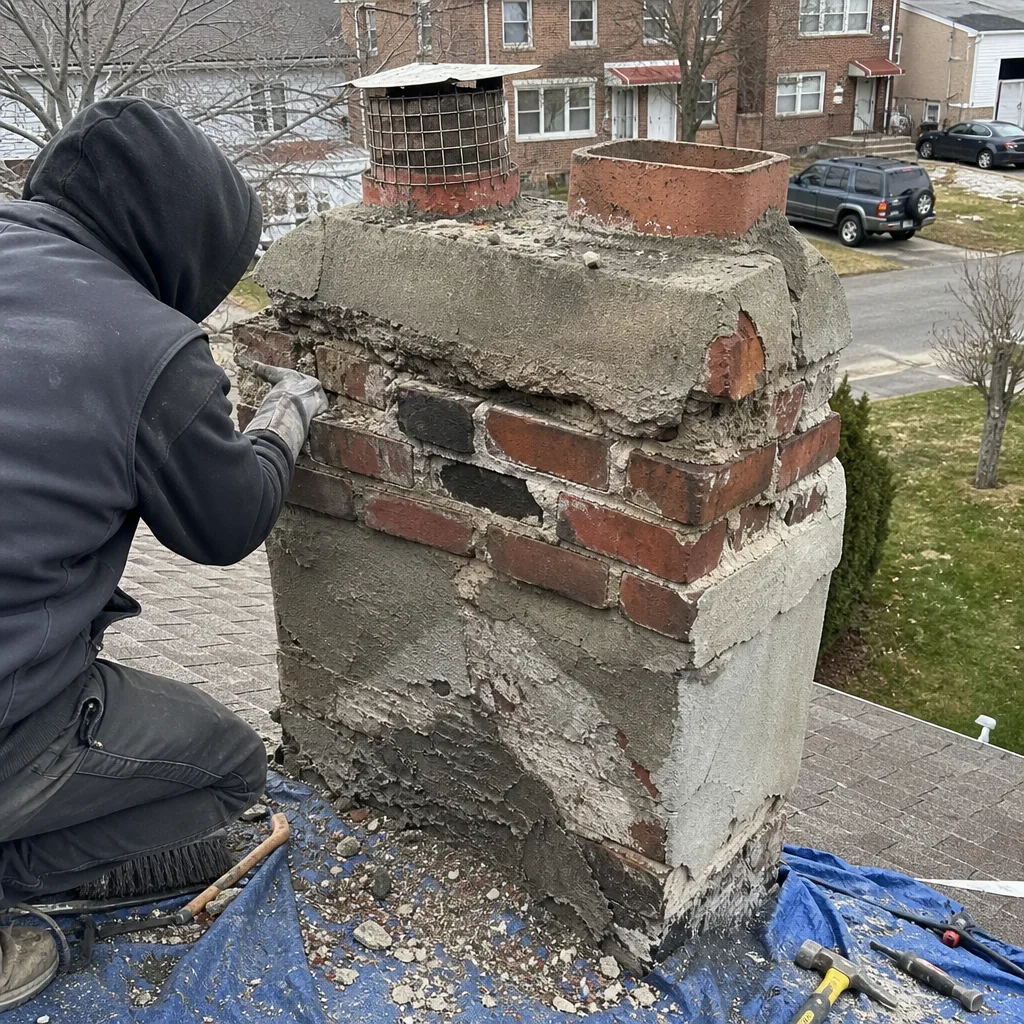
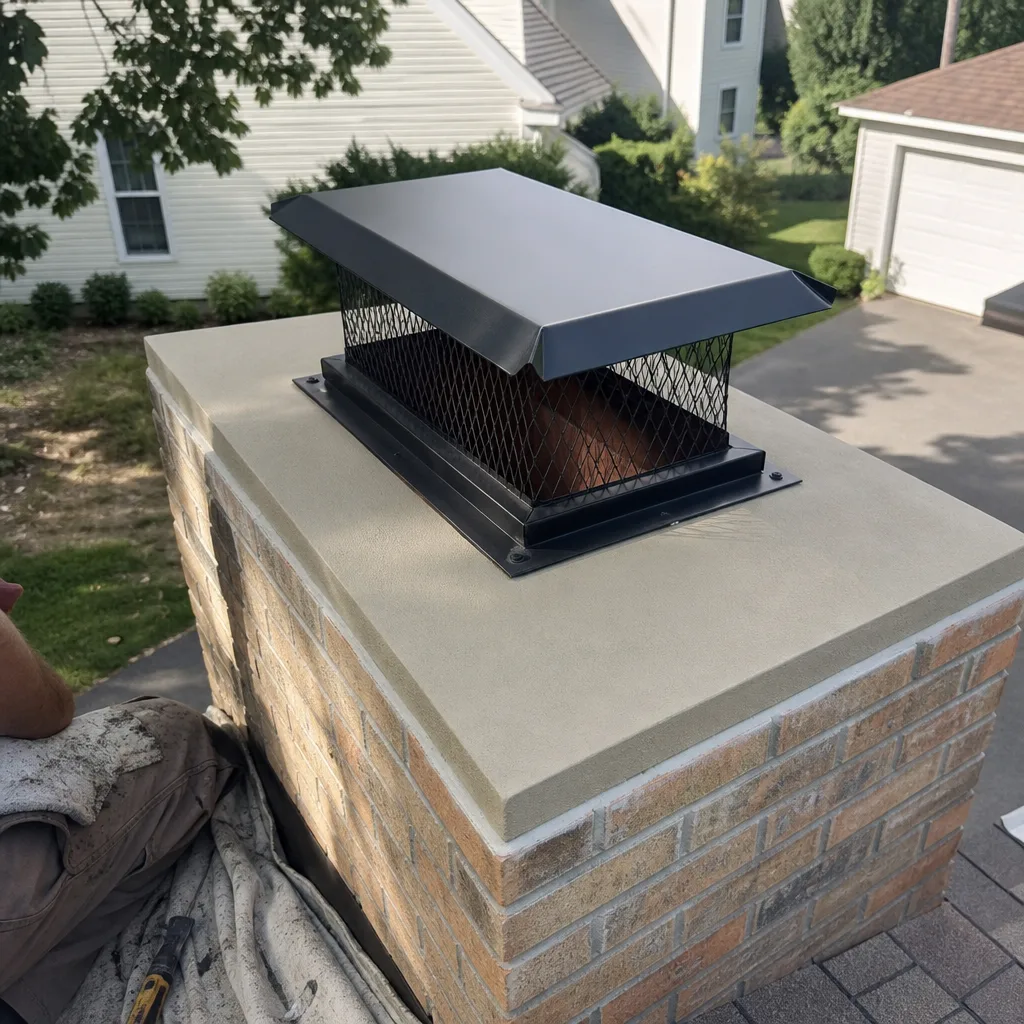
Level 1 sweep and inspection to the NFPA 211 annual standard - flue, crown, cap, and flashing checked and photographed
Chimney sweep logs do not sweep chimneys. They loosen some creosote - which then falls where a brush and vacuum still have to collect it.
 Before
 After
After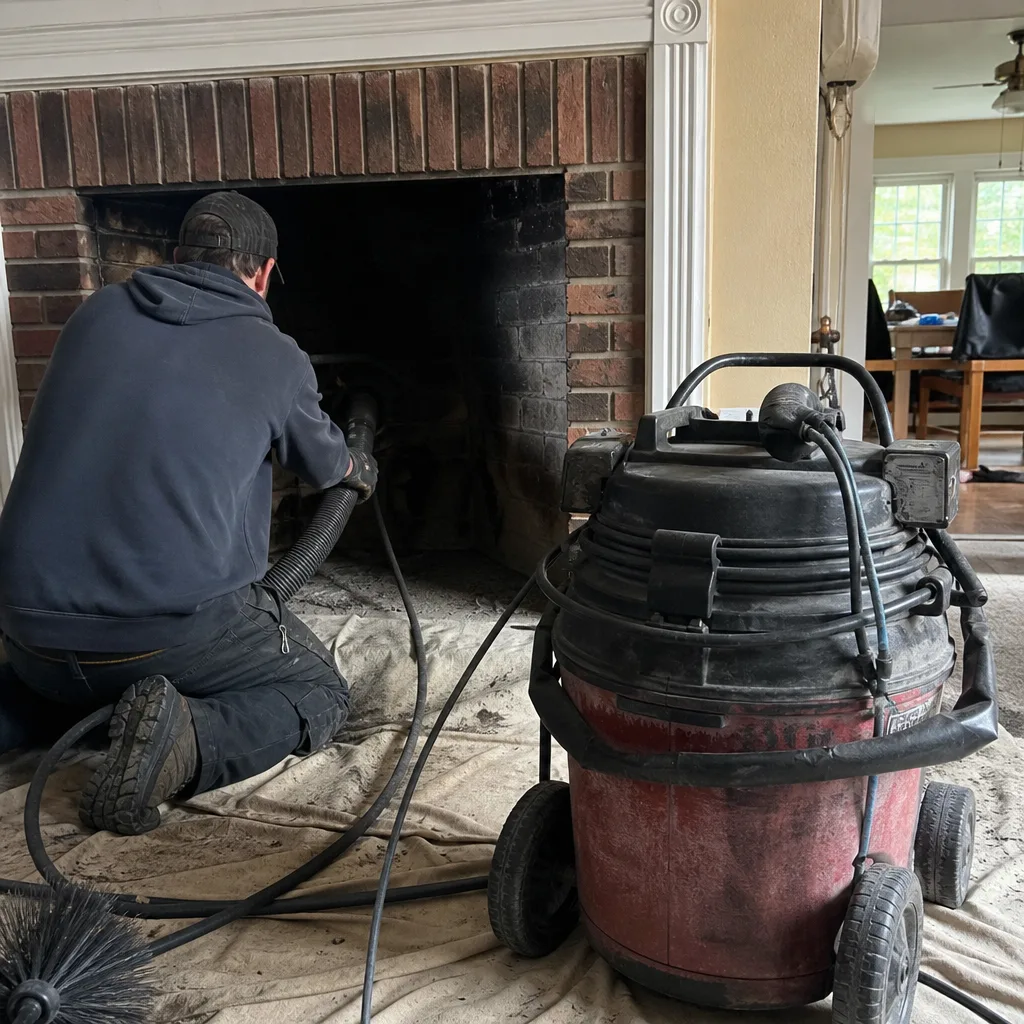 Before
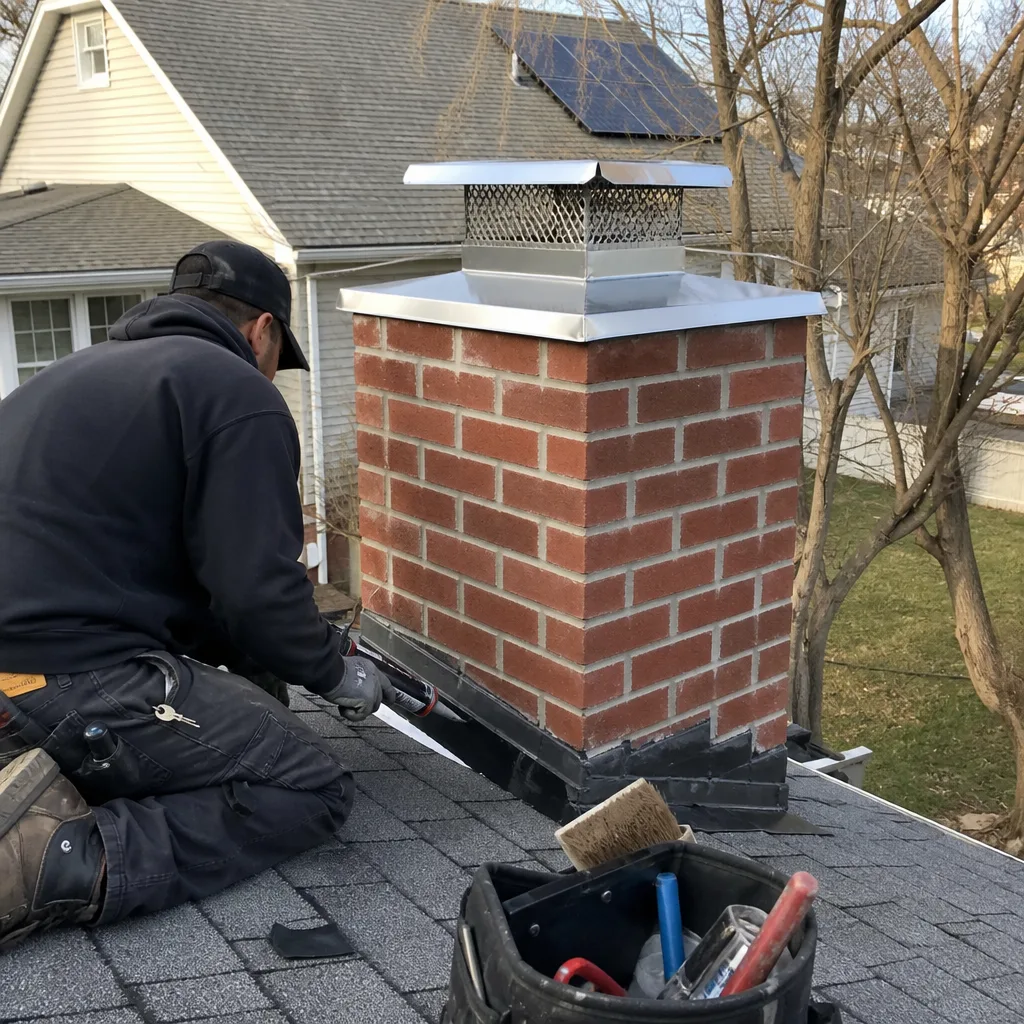 After
After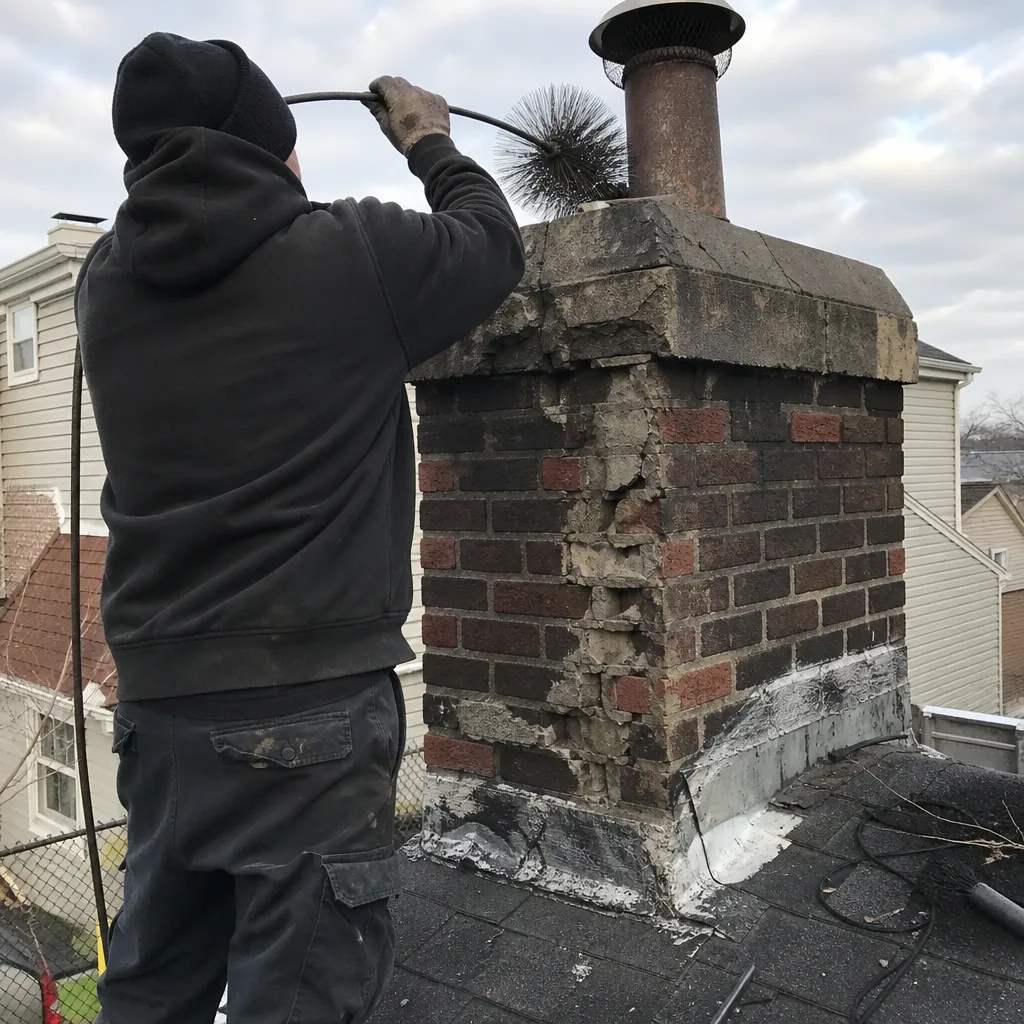 Before
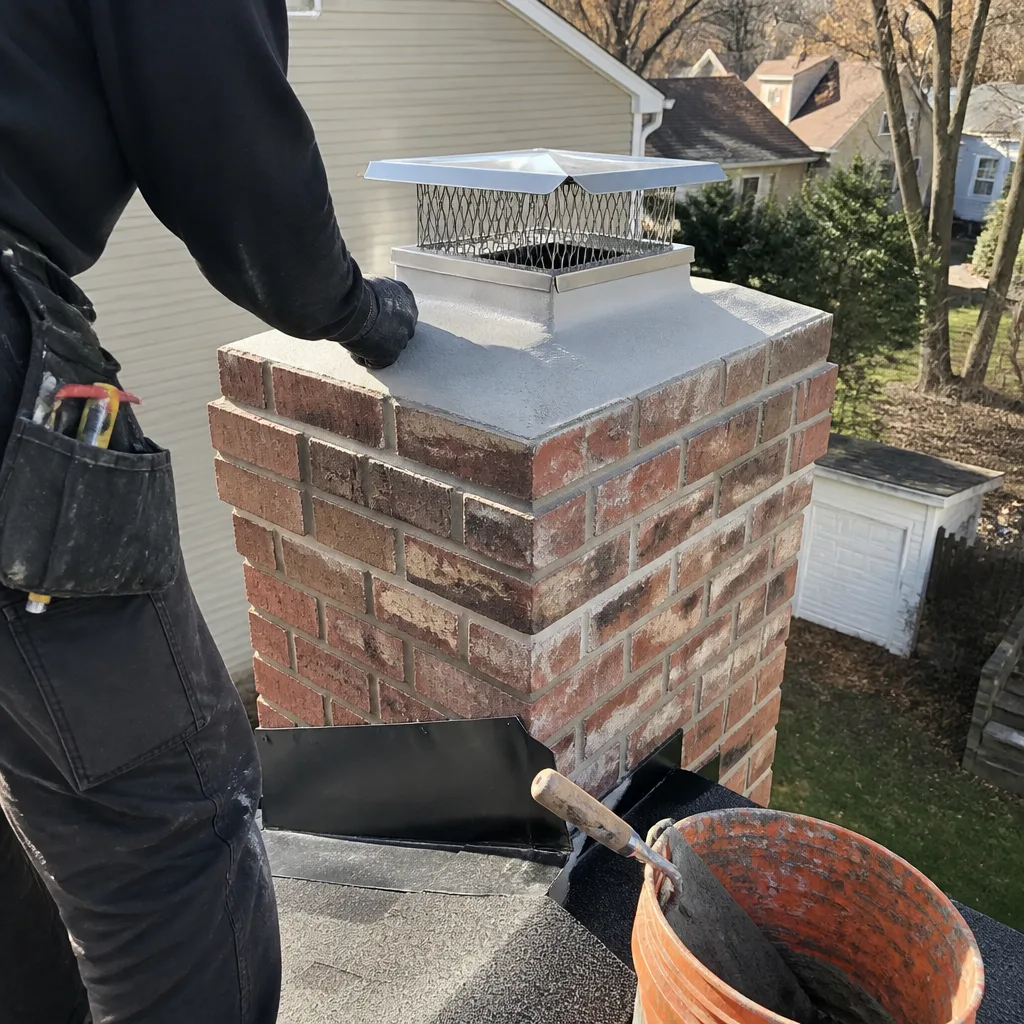 After
AfterCreosote Removal in Camden, NJ
Creosote removal in Camden, NJ typically runs between $150 and $800 depending on how much has built up and what class it has reached. Most standard cleanings with light-to-moderate creosote are completed in a single visit. When the deposit has hardened into Class III glazed creosote, a second chemical treatment appointment is often needed before the flue is clear.
If you have a wood-burning fireplace or stove in Camden and it’s been more than a year since your last sweep, there’s a reasonable chance creosote has been accumulating in your flue liner. That’s not a scare tactic – it’s just what wood combustion does. Incomplete burns, cooler flue temperatures, and unseasoned wood all speed the process. What starts as a dusty grey coating (Class I) can progress to a tar-like brown crust (Class II) and eventually to a hard, glazed, nearly impermeable shell (Class III) that conventional brush rods alone won’t remove.
At Level Two Chimney Co., we’ve been running camera-scan inspections on Camden chimneys since 2009 – which means we’ve seen what happens when creosote goes unaddressed for three, five, or ten seasons. We’re part of the broader home services network operating under the Haven Standard, and every creosote removal job we do starts with a written price before a brush goes in the flue. Our Chimney Cleaning & Sweep in Camden service is where creosote removal lives – this page goes deeper on what the process actually involves, what it costs, and how we document it.
To schedule a camera inspection and get a written quote, call us at (856) 741-9572. Someone answers live, 24 hours a day, 7 days a week.
When You Need Creosote Removal
Creosote doesn’t announce itself with obvious warning signs until it’s already a fire hazard. Here’s what to watch for:
- You smell a strong, oily or asphalt-like odor when the fireplace is cold. That smell is Class II or Class III creosote off-gassing through the flue. In Camden’s humid summers, the odor often pushes back into the living space when the fireplace damper is open and the air is still.
- You haven’t had a sweep in more than 12 months but burned wood regularly last winter. NFPA 211 recommends annual inspection and cleaning for solid-fuel appliances. One full heating season in a Camden rowhouse or older Pennsauken-adjacent home can produce enough deposits to warrant removal.
- Your fires are harder to start or smoke rolls back into the room. A heavy creosote buildup narrows the effective flue opening and disrupts the draft. What feels like a damper problem is sometimes a deposit problem.
- Your camera inspection shows orange, brown, or black coating on the flue liner walls. Under Level Two’s standard NFPA 211 Level 2 inspection, the camera footage will show the deposit color and texture clearly. A dusty grey means Class I; tacky brown means Class II; hard, shiny black means Class III.
- You had a chimney fire – even a small one. The popping, roaring sound some Camden homeowners describe as “the chimney was loud that night” is often a creosote fire inside the flue. After any suspected flue fire, the system needs a full inspection and creosote assessment before it’s used again.
- You burn a lot of pine, or your wood isn’t fully seasoned. Softwoods and wet wood burn cooler and produce significantly more creosote per cord. Homes in the Lanning Square and Parkside neighborhoods of Camden that rely on lower-cost wood sources tend to accumulate deposits faster than the annual sweep interval assumes.
Our Creosote Removal Process
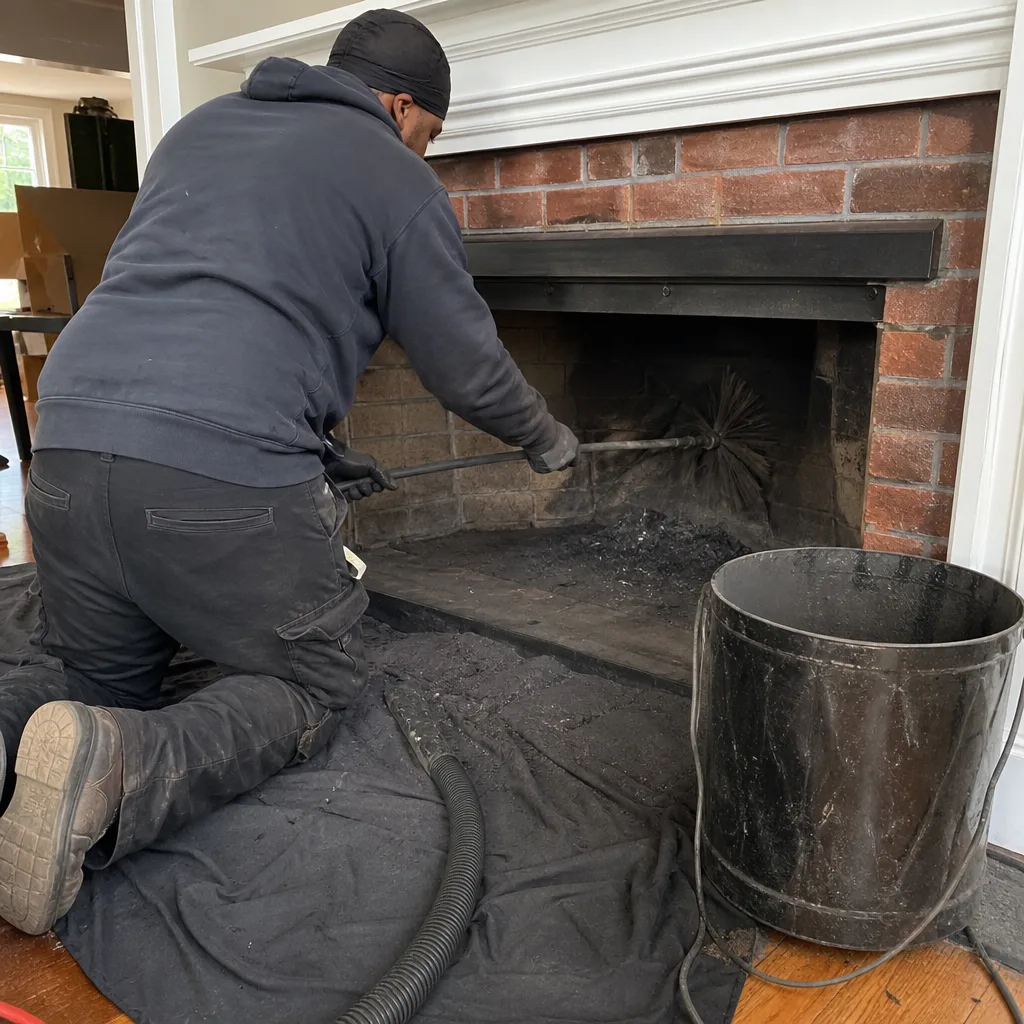
We don’t quote a price until we know what class of creosote we’re dealing with. That’s the honest way to do it – anything else is guessing at your expense.
-
Camera-scan inspection before we touch the flue.
A technician runs a live-feed camera down the full length of the flue liner, from the firebox throat to the chimney crown. We’re looking at deposit thickness, surface texture, and color. This is a Level 2 inspection under NFPA 211 – not a flashlight look from the firebox. The footage is saved as part of your documented record (Haven Standard Clause 4). The written price comes after this, not before. -
Written price and scope delivered before work starts.
Once we know what class we’re dealing with, we write it down: the exact scope of work, the price, and the warranty. You sign off or you don’t. Nothing starts until you have that in hand. This is Haven Standard Clause 1 – not optional, not sometimes. -
Class I and Class II removal by rotary brush system.
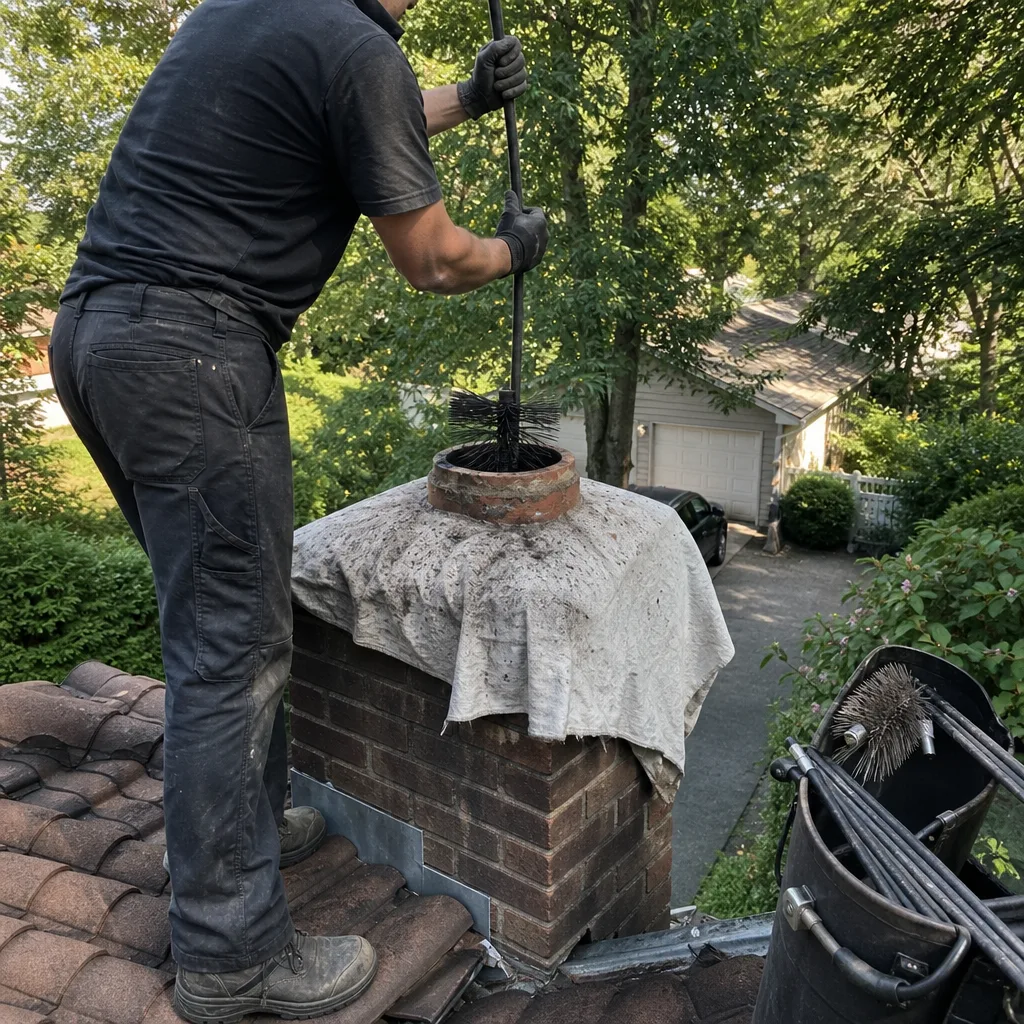
For standard deposits, our technicians use commercial-grade rotary brush equipment – the kind that attaches to a professional drill and covers the full flue diameter. This is considerably more thorough than manual rod-and-brush work. Drop cloths go down in the firebox area before anything opens. -
Class III chemical treatment when needed.
Glazed Class III creosote won’t come off with a brush. It has to be chemically modified first – a powdered or liquid product (we use professional-grade formulations, not the consumer products sold at hardware stores) is applied to the deposits and allowed to work for a set dwell period. On a follow-up visit, the modified material breaks away cleanly. This is a two-appointment process and is priced accordingly. We use materials sourced through Haven’s procurement network, which includes suppliers like Copperfield and HeatShield, specifically to keep material costs – and therefore your invoice – honest. -
Post-removal camera confirmation.
After the work is done, the camera goes back in. We’re confirming the deposit is gone and checking that the flue liner itself is undamaged. You get a photo record of the before and after. If we find liner damage – spalling tile, cracked clay, or a compromised DuraFlex liner section – we tell you what we found and what it costs to fix. We don’t start additional work without a new written scope. -
Written documentation on completion.
Every Level Two job closes with a written record: the camera footage, the scope that was completed, the material used, and the 365-Day Done Right Promise stamped on the job. If something isn’t right within 365 days, we make it right. That’s not a marketing phrase – it’s in writing on every invoice.
One note on safety: creosote removal – especially Class III – involves close-range work inside the flue and can expose techs to combustion byproducts and carcinogenic particulate. This is not a DIY project. High-temperature flue environments and the chemical treatments involved require professional handling. Please don’t attempt to modify or clean a Class III deposit yourself.
 Before
 After
AfterCreosote Removal Pricing in Camden
Creosote removal in Camden costs between $150 and $800 for most residential jobs. The range is wide because the work varies significantly by deposit class. Here’s how it breaks down:
| Creosote Class | What It Is | Typical Price Range |
|---|---|---|
| Class I | Light, dusty, grey or black flakes. Standard sweep removes it. | $150 – $250 |
| Class II | Porous, tar-like crust. Heavier rotary brush work required. | $250 – $450 |
| Class III | Hard, glazed, shiny shell. Chemical treatment plus follow-up sweep. | $450 – $800+ |
Several things affect where your job falls in those ranges:
- Flue height. A two-story brick chimney on a Victorian in Cooper Grant has more linear footage than a one-story ranch flue – more surface means more time and materials.
- Flue shape and liner type. Round flexible liner (like a DuraFlex stainless insert) is easier to clean than an older clay tile liner with offset joints. Offset joints trap deposits and slow the brush work.
- Time since last cleaning. A flue that was swept 14 months ago and burned two cords of seasoned oak is very different from one that went six years between cleanings and burned whatever was available.
- Number of flues. Camden rowhouses and the older duplexes around the Waterfront South area sometimes have two or three flue systems in one chimney structure – a furnace flue, a fireplace flue, and a boiler flue, for instance. Each is priced and scoped separately.
- Class III chemical treatment appointments. If the camera shows glazed creosote, two visits are billed. The chemical dwell appointment and the follow-up sweep are included in the upper end of the Class III range above.
We don’t quote a number before the camera has been down the flue. But we also don’t make you wait for a phone call after the inspection – the written price is ready before the technician leaves the conversation. Estimates are free. If you already have a written estimate from another company, bring it. We offer a free second opinion on any written competitor quote.
Call (856) 741-9572 to book a camera inspection and get a written price the same day.
FAQs – Creosote Removal in Camden
How much does creosote removal cost in Camden, NJ?
Creosote removal in Camden typically costs between $150 and $800 for residential chimney systems, depending on the class of deposit. Class I removal (light, dusty buildup) runs $150-$250 and is handled in a Chimney Cleaning & Sweep services appointment. Class II (tacky, layered crust) runs $250-$450 with rotary brush equipment. Class III glazed creosote requires a chemical treatment followed by a second cleaning visit and costs $450-$800 or more for tall or complex flue systems. We don’t confirm a price until after the camera inspection – but the written quote is ready the same day. Call (856) 741-9572 for a free inspection and same-day estimate.
Is Class III creosote actually dangerous, and does it need to be removed right away?
Class III creosote is the most dangerous form of chimney deposit and should be removed before the Fireplace Cleaning is done again. It is a hard, glazed shell that can ignite at temperatures a wood fire routinely reaches, and once it ignites it burns extremely hot – hot enough to crack a clay tile liner or damage a masonry chimney structure. Camden’s older housing stock, including the brick rowhouses in Centerville and the single-family homes near Ferry Avenue, often has clay tile liners that are already decades old. A creosote fire in one of those flues is not a slow event – it can cause structural damage or spread to the building in minutes. If the camera shows Class III, we’ll tell you plainly and give you a written price to address it before the next fire is lit.
Can you remove creosote in one visit, or does it take multiple appointments?
Class I and Class II creosote are removed in a single visit in most cases. Class III glazed creosote requires at least two appointments: one to apply the chemical modification treatment and allow it to work, and a second to sweep out the modified material and do a post-removal camera confirmation. We price both visits together upfront and put it in writing before either appointment starts – no surprise invoice after the second visit. For Camden homeowners scheduling before the heating season, we build both appointments into the same booking so you’re not waiting weeks between them.
What’s the difference between a chimney sweep and creosote removal?
A chimney sweep refers to the full cleaning and inspection service – it covers the firebox, smoke chamber, damper, and flue liner, and removes whatever deposits have accumulated. Creosote removal is the specific work done on the flue liner when creosote (as opposed to general soot or debris) is the primary finding. For Class I deposits, the sweep and the creosote removal are the same appointment. For Class II and III, the creosote work is a distinct step – with specific equipment, chemicals, and a follow-up confirmation – that goes beyond a standard sweep. On every Level 2 Inspection, the camera inspection tells us exactly which work is needed so we scope it accurately before we quote it.
Key Takeaways
- Creosote removal in Camden costs $150-$800 depending on deposit class. Class I is a single sweep; Class III requires chemical treatment across two appointments.
- Every job starts with a camera-scan inspection (NFPA 211 Level 2). The written price comes after that, not before the camera is in the flue.
- Class III glazed creosote is a fire hazard and should not be burned over. If the camera shows it, stop using the fireplace until it’s cleared.
- Camden’s older rowhouse stock – particularly clay tile flue liners – is more vulnerable to creosote fire damage. Annual inspections are practical, not excessive.
- Every Level Two job is backed by the 365-Day Done Right Promise and a documented photo record. You leave with paper, not just a verbal assurance.
- Estimates are free. Second opinions on competitor written quotes are free. The written price arrives before work starts – always.
To book a creosote inspection for your Camden home or to get a written quote on an existing estimate, call Level Two Chimney Co. at (856) 741-9572. Someone answers live around the clock. Corrine Halstead and the Level Two team have documented and cleaned more than 38,000 chimney systems since 2009 – every one with a written price before the work started and a photo record when it was done.
Written by Corrine Halstead, Owner at Level Two Chimney Camden, serving Camden.