
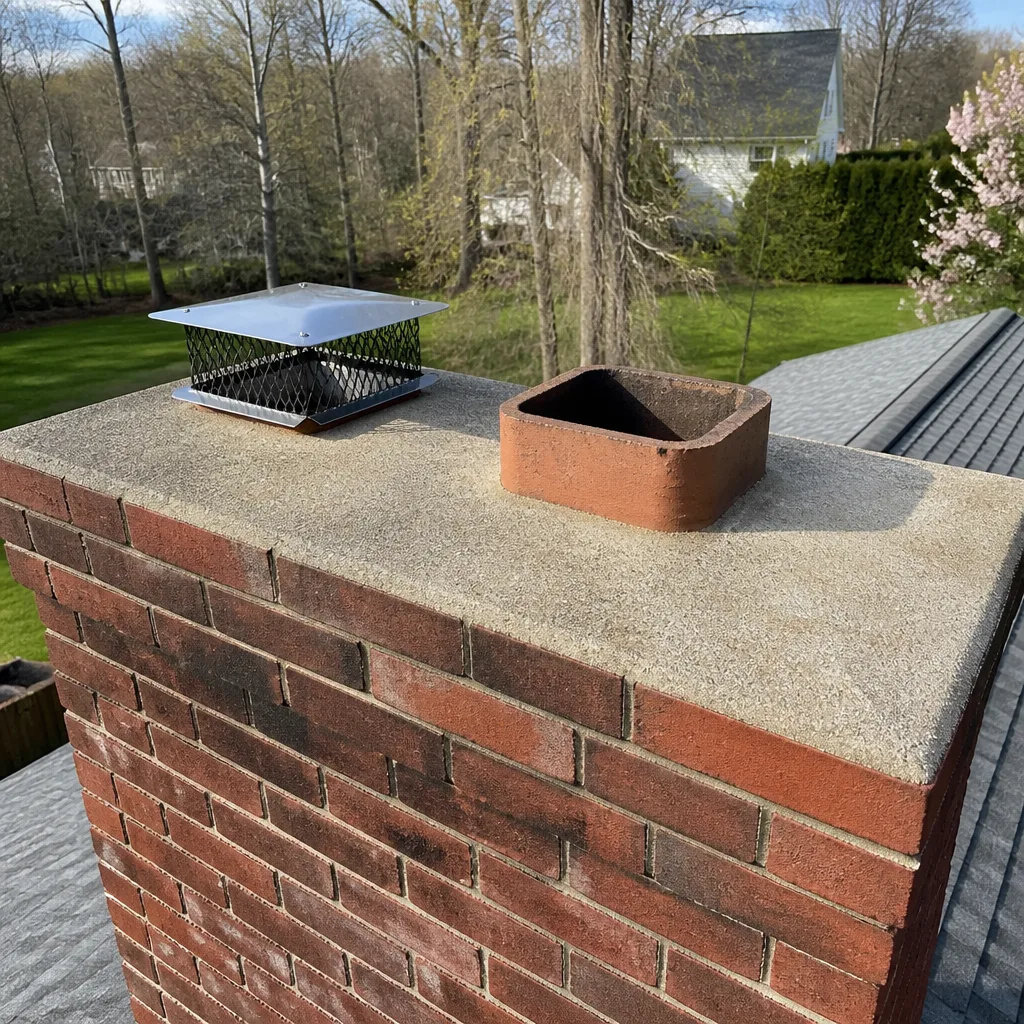
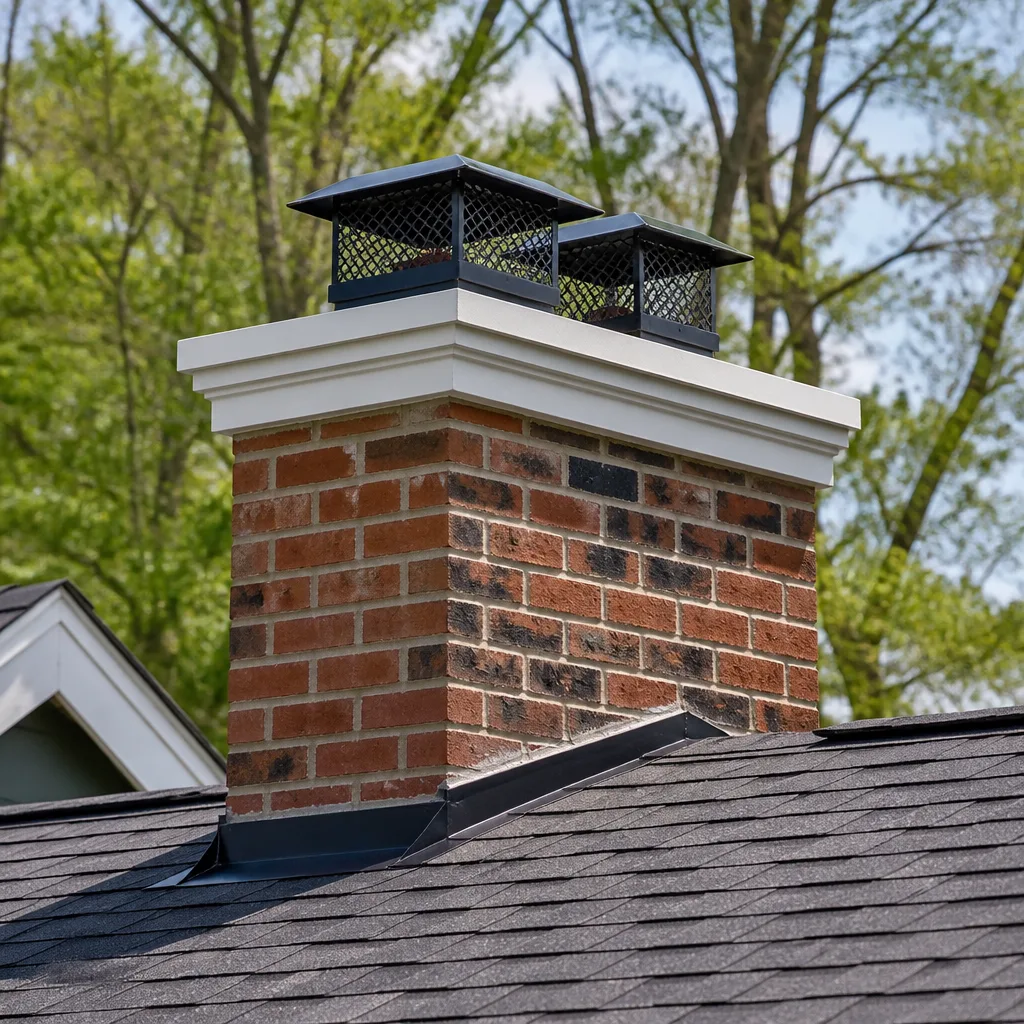
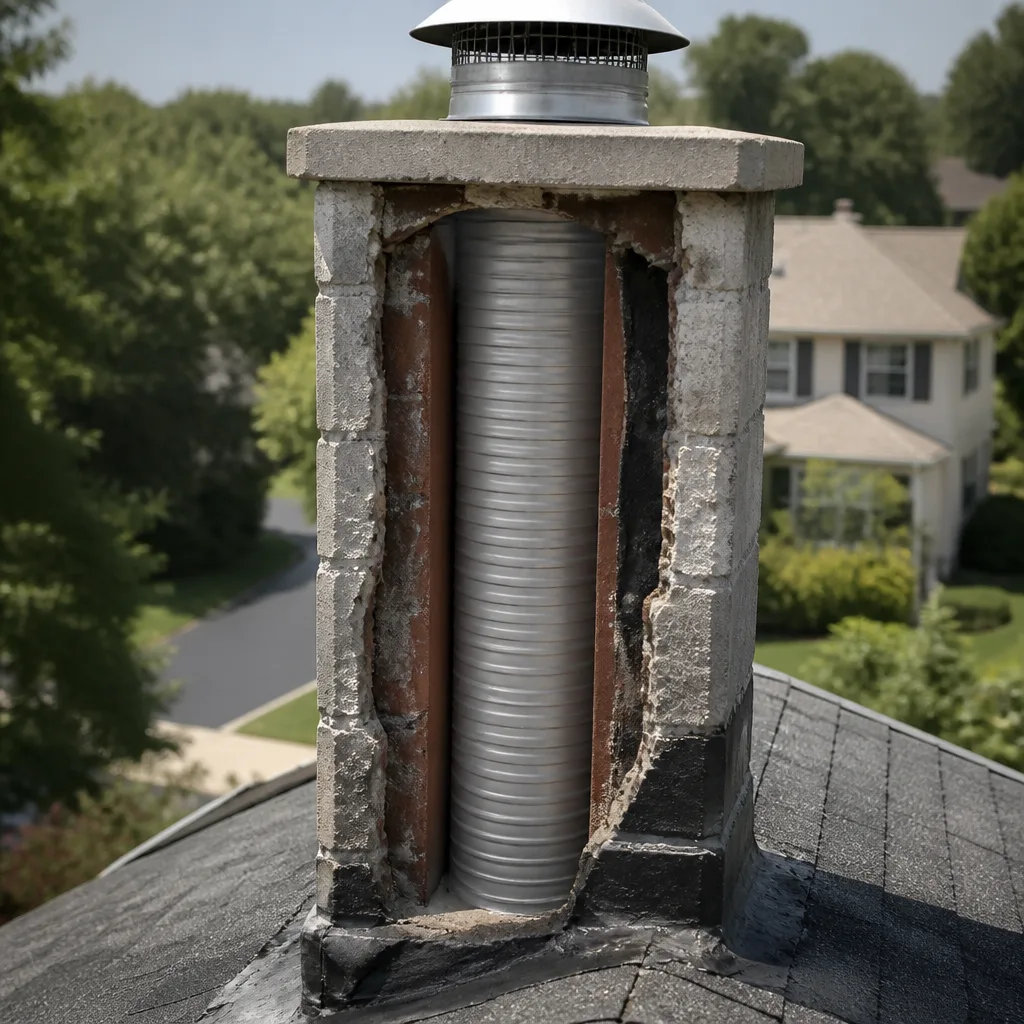
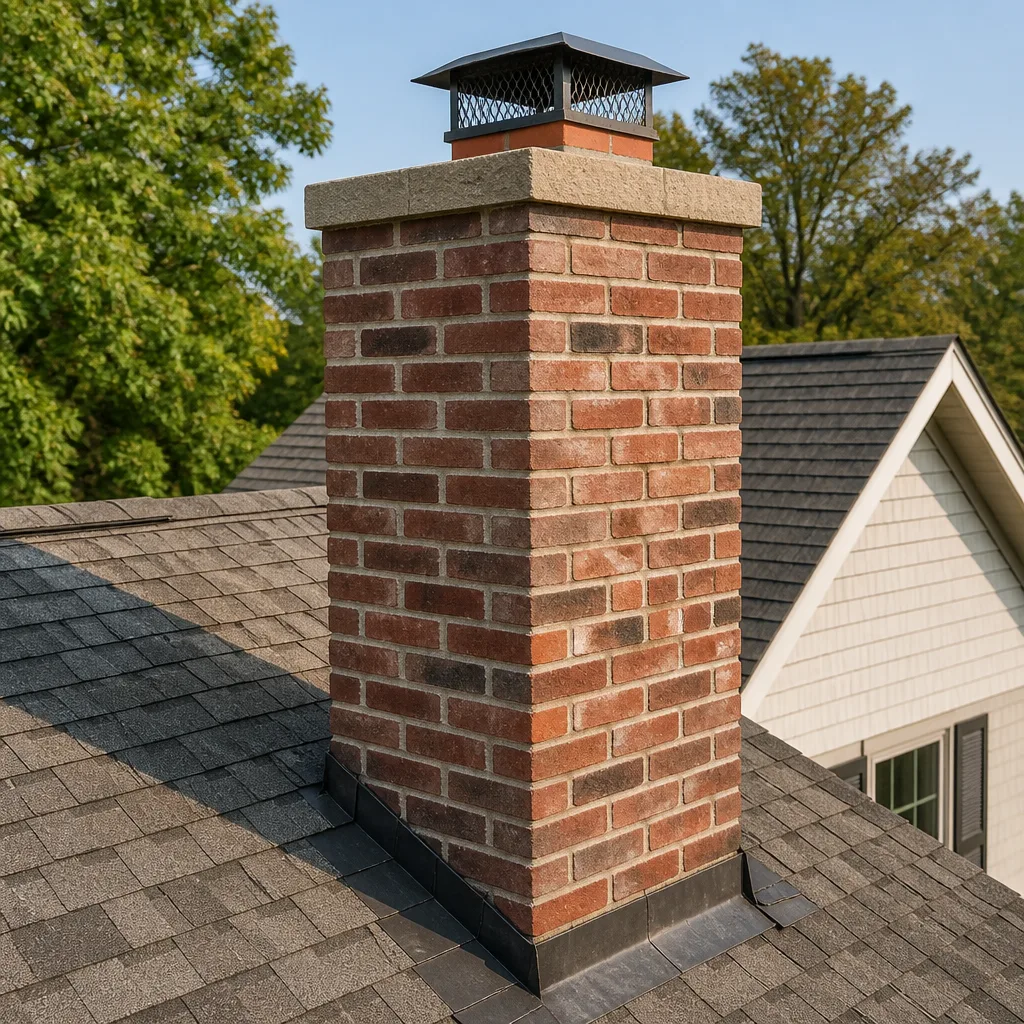
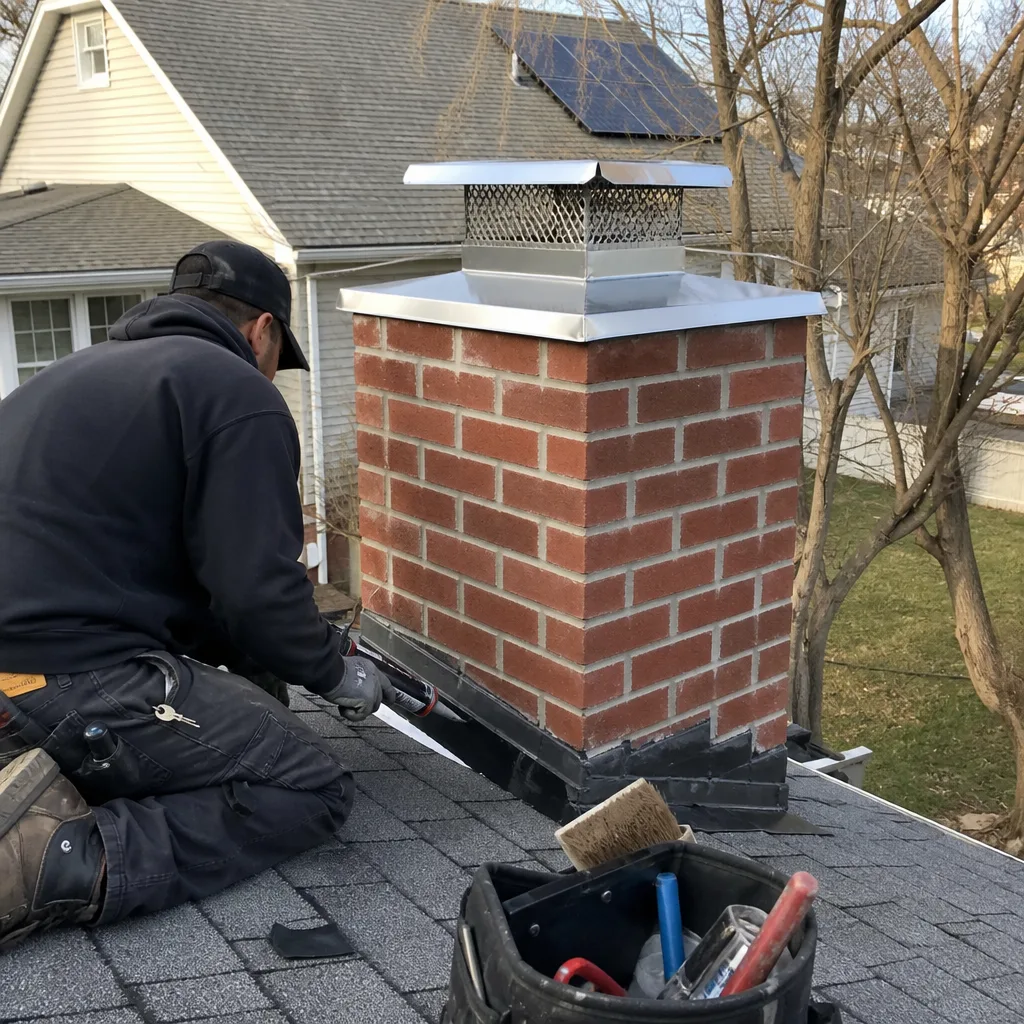
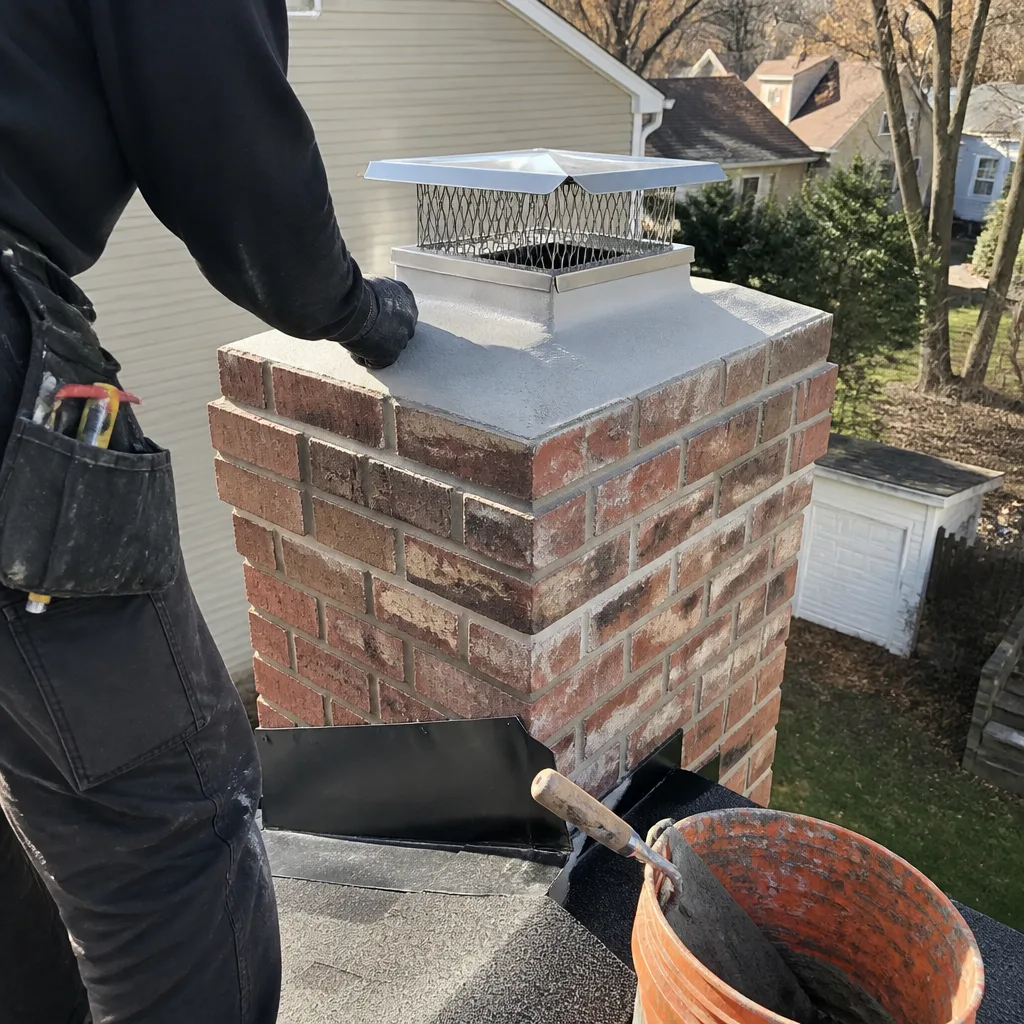
Level 1 sweep and inspection to the NFPA 211 annual standard - flue, crown, cap, and flashing checked and photographed
Chimney sweep logs do not sweep chimneys. They loosen some creosote - which then falls where a brush and vacuum still have to collect it.
 Before
 After
After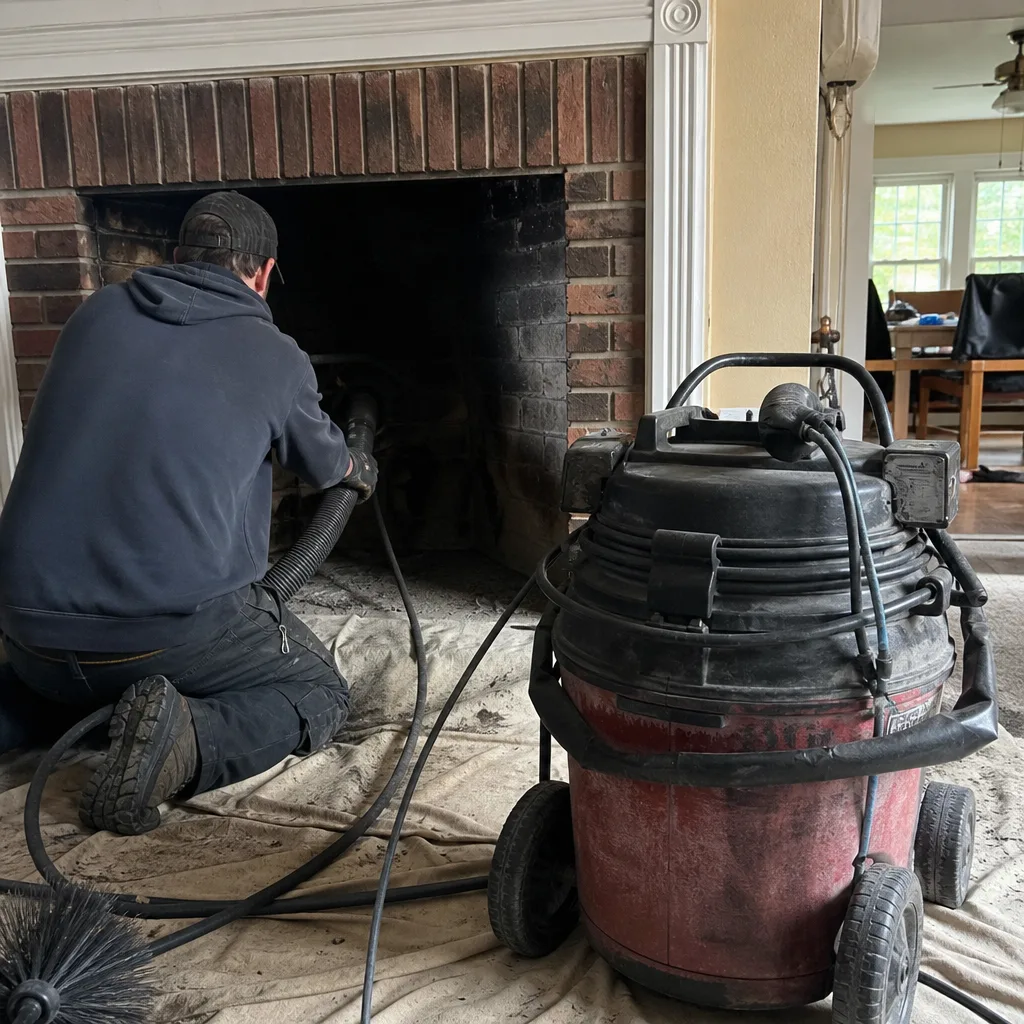 Before
 After
After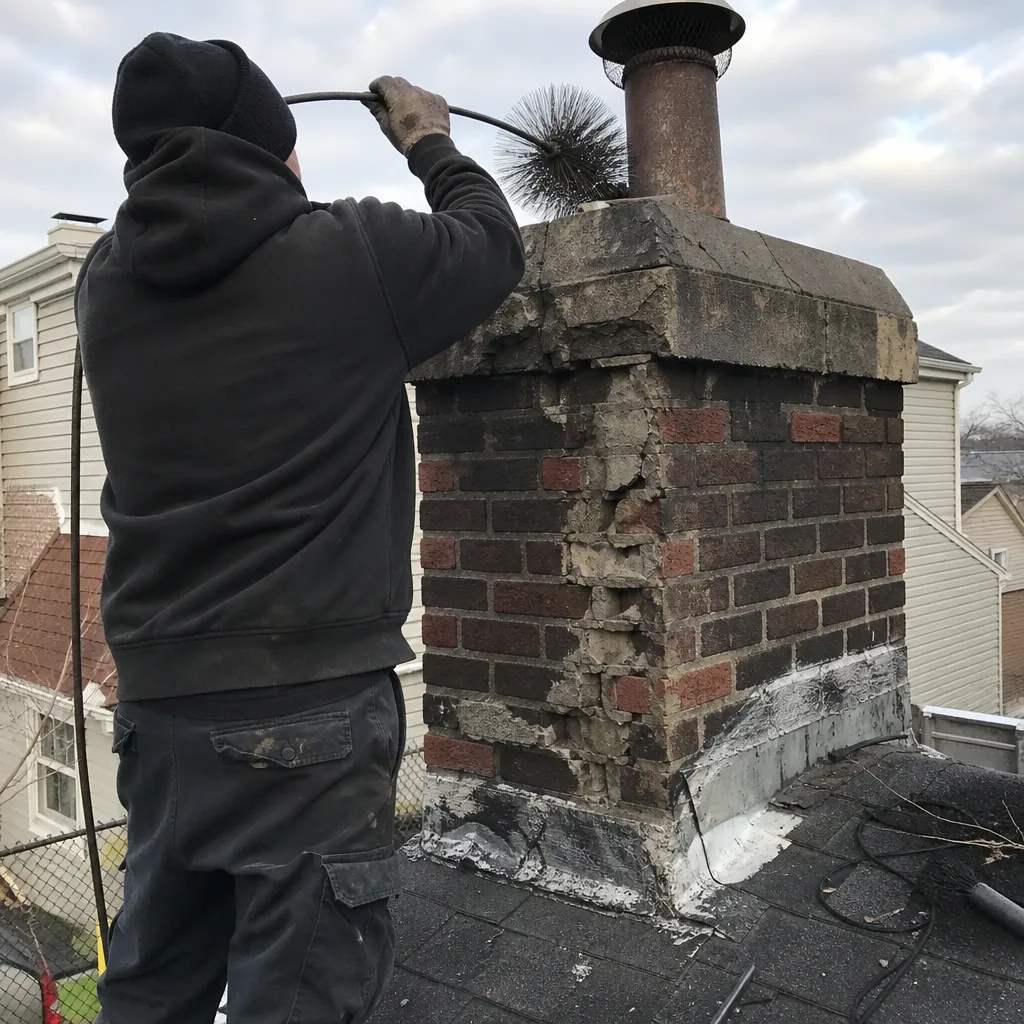 Before
 After
AfterSoot Removal in Camden, NJ
Soot removal in Camden typically runs $149 to $349 depending on flue length, soot depth, and whether a full Chimney Cleaning & Sweep in Camden is needed alongside it. Most jobs are completed in a single visit, and every one starts with a written price before the brush goes anywhere near your flue liner. At Level Two Chimney Camden, we’ve cleaned more than 38,000 chimneys since 2009 – every single job with a written scope, a documented photo record, and a 365-Day Done Right Promise behind it. Call us at (856) 741-9572 and a live person picks up, any hour.
Soot is a different animal than creosote. Where creosote is the tarry, glazed residue that builds from incomplete combustion and creates serious fire risk, soot is the fine, powdery carbon byproduct that coats flue walls, smoke chambers, firebox surfaces, and sometimes the interior of your home when a draft goes wrong. It’s lighter, it travels farther, and in older Camden row houses and colonials with tight flue clearances, it can migrate into living spaces faster than most homeowners expect. Light or not, a buildup of fine soot narrows your draft, reduces combustion efficiency, and – when it gets into the smoke chamber and throat damper area – accelerates deterioration of mortar and tile. We see it constantly in the homes we service throughout Camden, and it’s why our Chimney Cleaning & Sweep services stay busy year-round-it’s not a problem that waits until spring to cause trouble.
Corrine Halstead built Level Two Chimney Camden on one principle: document everything before and after, put the price in writing first, and back the work for a full year. That’s not a marketing line. It’s Clause 1 and Clause 4 of the Haven Standard, and it’s been the way every job has run since 2009.
When You Need Soot Removal
Soot doesn’t announce itself with a crack or a collapse. It accumulates quietly, and most Camden homeowners only notice it after something goes sideways – a draft that suddenly reverses, a smell that won’t leave the living room, or a faint gray dusting on the mantel or nearby walls. Here’s what to watch for:
- A persistent smoky odor in the room, even when the fireplace isn’t in use. In Camden’s older housing stock – particularly the brick row homes in Parkside and the pre-war colonials near Rutgers-Camden – tight floor plans mean soot odor moves through gaps in the smoke shelf or a warped damper plate and settles indoors quickly.
- Visible soot staining on the firebox floor, back wall, or surround. A faint gray haze on brick or stone is normal after a fire. A thick matte-black coating that extends above the smoke shelf or onto the damper frame means buildup is past the cosmetic stage.
- Gray or black particles landing on furniture near the fireplace. This usually points to a draft reversal – cold outside air pushing down the flue and carrying fine soot with it. Camden’s riverside location and the pressure differences between tightly insulated modern windows and older masonry stacks make this more common here than in some inland markets.
- Your HVAC filter is noticeably darker than usual. Fine soot is light enough to travel through return air pathways when a chimney backdrafts. If your filter is graying faster than normal, the flue is worth checking.
- A NFPA 211 Level 2 inspection found soot accumulation in the smoke chamber or flue liner. If a camera scan has documented deposits on the tile liner or the smoke chamber corbeling, removal needs to happen before the next fire season – not because it sounds urgent, but because soot accelerates spalling in older clay tile liners.
- You’ve recently had a chimney fire, even a small one. Soot deposits are often disturbed and redistributed during a chimney fire event, and a thorough removal is part of the post-fire documentation process before a flue goes back into service.
Our Soot Removal Process
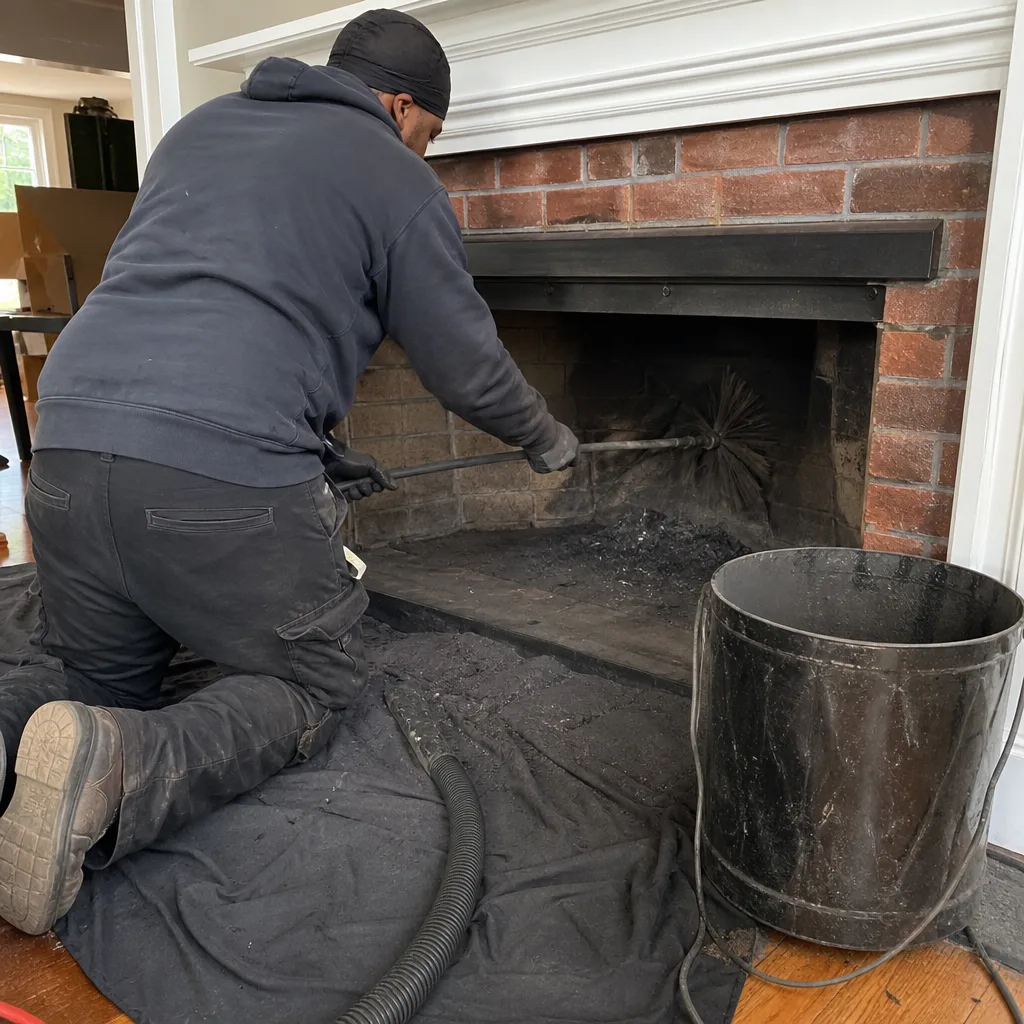
Every technician who arrives is background-checked, uniformed, and assigned to your job by name – you’ll get a text when they’re on the way. The process runs the same way on every visit because the Haven Standard doesn’t have an “off day” version.
- Pre-work inspection and documentation. Before anything is removed, we put a camera down the flue. This isn’t a flashlight glance at the damper – it’s a full NFPA 211 Level 2 camera scan from the firebox to the crown that documents existing liner condition, soot depth, and any secondary issues (cracked tile, failed mortar joints, debris) in your flue on the day we arrive. The photo record is yours to keep. Under Haven Standard Clause 4, this is not optional and it is not an upcharge.
- Written price delivered before work starts. Based on what the camera shows, we give you a written price that covers the scope of soot removal, any related cleaning, and any materials if needed. Haven Standard Clause 1 is explicit: written price, written scope, written warranty – before any brush touches your flue. No “we’ll let you know when we’re done.”
- Firebox and smoke chamber preparation. We seal the firebox opening with a dust barrier before brush work begins. In Camden homes with open floor plans or hardwood near the hearth, this step matters more than homeowners usually expect. Copperfield drop cloths and HEPA-filtered vacuums are standard kit.
- Mechanical soot removal, top-down and bottom-up. Depending on flue length and geometry, we run both top-down rotary brush work and bottom-up hand-tool passes through the smoke chamber. Fine soot in the smoke chamber corbeling is worked out manually – a brush rod isn’t precise enough in that area. Smoke shelves are vacuumed directly because soot there is heavy enough to drop into the firebox and redistribute if you rush it.
- HEPA vacuum extraction. All loosened soot is captured by continuous HEPA vacuum during removal. We don’t let material settle and then clean up – the vacuum runs throughout. This is especially important in Camden’s older homes where original hardwood floors and plaster walls are in the same room as the hearth.
- Post-removal camera confirmation and written record. After removal, the camera goes back down. The before-and-after photo set is documented and delivered to you. If the camera shows something that wasn’t visible before soot was cleared – a hairline crack in the flue liner tile, for example – we tell you what it is, what it means in plain terms, and what it would cost to address. You decide. No pressure, no upsell theater.
 Before
 After
AfterSoot Removal Pricing in Camden
How Much Does Chimney Cleaning & Sweep Cost? (2026 Price Guide) - Camden, NJ: Soot removal in Camden runs $149 to $349 for most residential jobs. Here’s what moves the price within that range:
- Flue length and geometry: A standard single-story Camden row home with a 15-foot flue is faster to clean than a three-story colonial with a 30-foot stack and a 90-degree offset. Longer flues and irregular geometry take more time and more rod sections.
- Smoke chamber condition: Heavy soot accumulation in the smoke chamber corbeling requires manual hand-tool work that adds time. Corbeling in Camden’s older masonry stacks – some dating to the 1920s and 1930s – tends to accumulate more than newer parged chambers.
- Combined service scope: If the camera shows a full cleaning is needed alongside soot removal (Class I or Class II creosote in addition to soot deposits), a combined chimney cleaning job runs $229 to $429 for most Camden homes. Everything is itemized in the written price before work starts – you see exactly what you’re paying for and why.
- Access and stack configuration: Some Camden properties – particularly multi-unit buildings converted to single-family use near the waterfront – have stacks that require roof access. Roof work adds to the job time and is priced accordingly, in writing, before we start.
A written estimate is free. Bring us any competitor’s written quote and we’ll give you a free second opinion on it – that’s an open offer, no strings attached. Call (856) 741-9572 for an exact figure for your specific home and flue configuration.
What Soot Leaves Behind If You Don’t Remove It
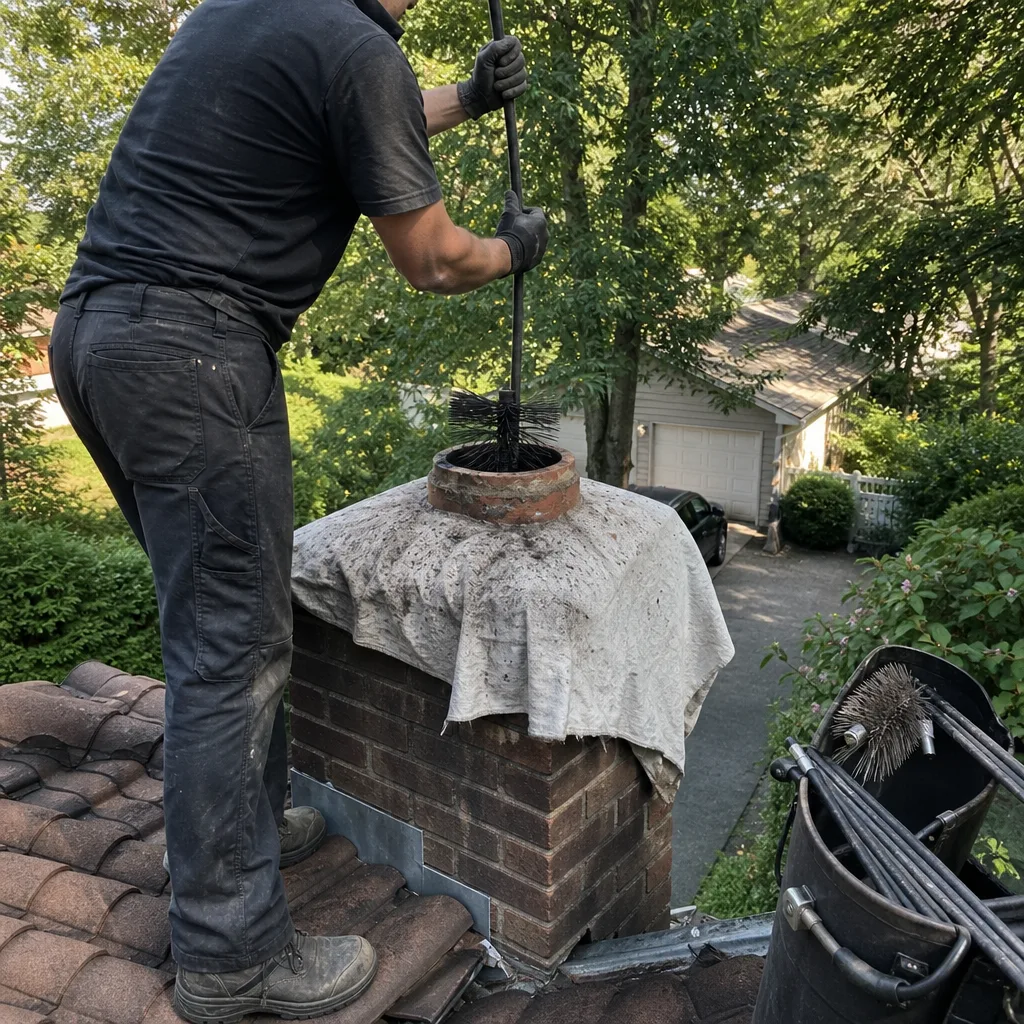
The consequence that most homeowners underestimate isn’t the fire risk – that’s more specific to Class II and Class III creosote. With soot, the primary damage pattern is slower: acidic soot deposits accelerate the deterioration of clay tile flue liners and the mortar joints between them. In a Camden home where the liner is already 30 or 40 years old, a season or two of soot buildup can advance the cracking timeline measurably. We’ve done camera scans in Cramer Hill and Cooper Grant where the flue tile showed early spalling – hairline cracks opening at the joints – that traced directly to acidic soot deposits sitting against the clay surface through multiple fire seasons.
There’s also the draft performance issue. A flue with significant soot accumulation on the interior walls has a reduced effective diameter. For a fireplace that was already marginal on draft – and Camden’s row homes with low rooflines and close neighboring structures often are – even a partial restriction is enough to cause smoke spillage into the room. That’s not a comfort complaint. That’s carbon monoxide in your living space, which is why we treat soot removal as a functional maintenance item, not an aesthetic one.
If you’ve been burning wood regularly and haven’t had the flue documented in two or more years, a camera scan will tell you exactly what’s there. That scan is included in every visit we do – it’s not an add-on, and it doesn’t cost extra.
Why Camden Homes See More Soot Buildup
Camden’s housing stock is older than most people realize. A significant portion of the single-family and row homes in neighborhoods like Parkside, Fairview, and Morgan Village were built between 1910 and 1955, and many of those original clay tile flue liners are still in service. Older flue liners tend to have rougher interior surfaces – more texture for fine soot particles to cling to. Smaller firebox-to-flue ratios, common in that era’s construction, also mean incomplete combustion is more likely even with seasoned wood, producing more soot per cord burned.
The Delaware River corridor also factors in. Camden sits in a low-lying area where temperature inversions in fall and early spring can suppress chimney draft. When outside air pressure exceeds the thermal pressure inside the flue, draft slows or reverses, and soot doesn’t exit cleanly – it deposits on flue walls instead of moving up and out. It’s a real meteorological pattern that we see play out in calls from homeowners in Waterfront South and the South Camden neighborhoods every October and March without fail.
None of this means your chimney is broken. It means it needs the same documented maintenance that any working system in a 70-year-old house requires. An Annual Sweep, a camera scan, a written price, and a same-day removal job handles it.
FAQs – Soot Removal
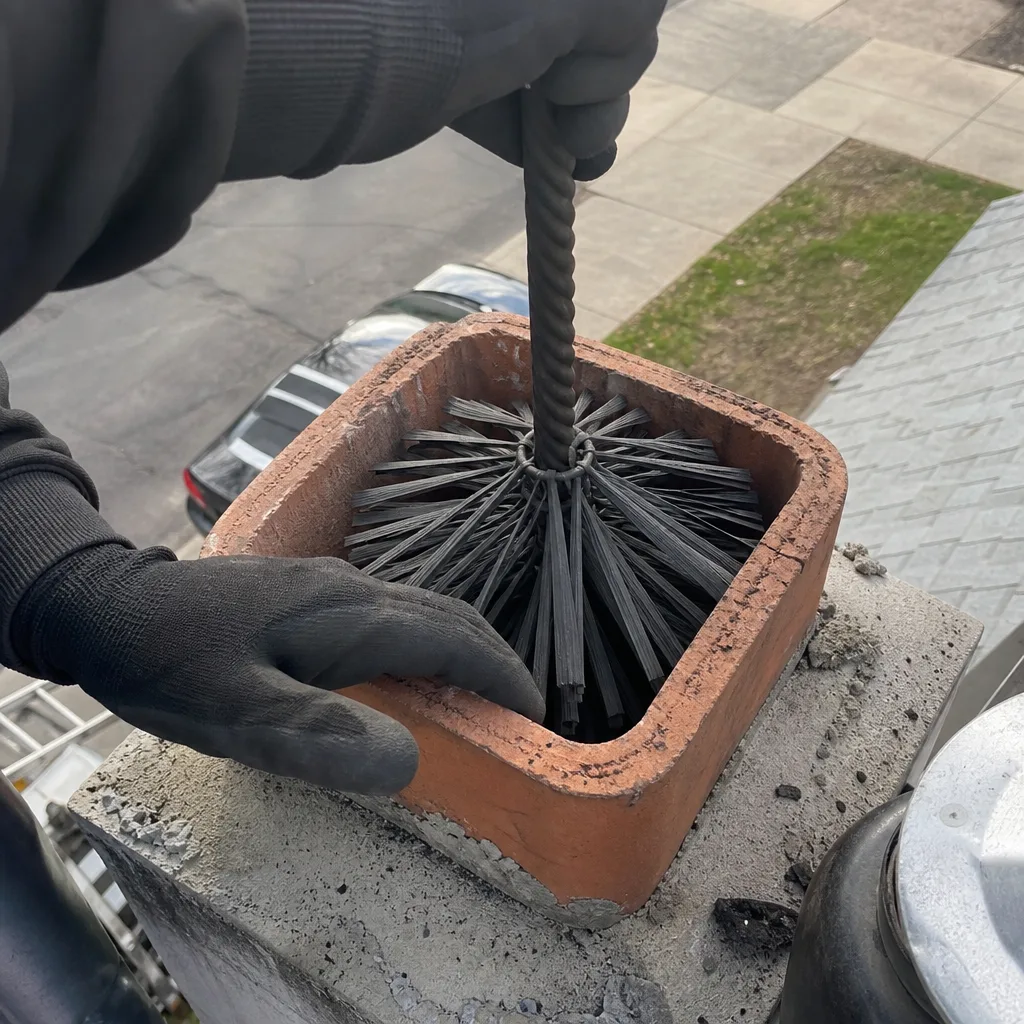
How much does soot removal cost in Camden, NJ?
Soot removal in Camden costs $149 to $349 for most residential chimney flues. The price depends on flue length, smoke chamber condition, and whether a combined cleaning is needed. Every job is quoted in writing before work begins – call (856) 741-9572 and we’ll give you an exact figure for your home at no charge.
Is soot removal the same as a chimney sweep?
Soot removal is part of what a full chimney sweep covers, but not always identical to it. A chimney sweep addresses the full flue system – soot, creosote (Class I through Class III), debris, and blockages. Soot removal as a standalone service focuses specifically on the fine carbon deposits on flue walls, smoke chamber, and firebox surfaces. If a camera scan shows only soot with no significant creosote buildup, a targeted removal job is appropriate and generally less expensive than a full sweep. If there’s creosote alongside soot, we quote both in a single written scope. Our Chimney Cleaning & Sweep in Camden page covers the full scope in detail.
Can soot removal be done the same day I call?
In most cases, yes. We carry equipment for soot removal on every service van, and same-day scheduling is available in Camden when our calendar allows. Call (856) 741-9572 – a live person answers 24 hours a day – and we’ll tell you the first available slot. We don’t hold appointments or quote availability through a web form.
Is it safe to use my fireplace if there’s soot buildup?
Light surface soot on firebox walls is normal after regular use and doesn’t represent an immediate hazard. Heavy soot in the flue liner or smoke chamber is a different situation: it restricts draft, increases the risk of smoke spillage and carbon monoxide entering the room, and accelerates clay tile deterioration over time. If you’re seeing soot staining beyond the firebox, smelling smoke in the room when the fireplace isn’t running, or it’s been two or more seasons since the flue was documented, stop using the fireplace and have a camera scan done first. Call (856) 741-9572 and we’ll get someone out to look at it.
What’s included in the soot removal visit?
Every visit includes a NFPA 211 Level 2 camera scan before and after removal, a written price before any work starts, HEPA-filtered dust control throughout the job, and a documented photo record when we’re done – yours to keep. The 365-Day Done Right Promise covers every job: if something isn’t right, we come back and make it right. That’s Haven Standard Clause 4 and the 365-Day Promise operating together, not as separate upsells but as the baseline on every job we do in Camden.
Book Your Soot Removal Estimate in Camden
If your fireplace has been burning through recent seasons without a documented inspection, or you’ve noticed any of the signs above, the next step is to find Chimney Cleaning & Sweep Near Me in Camden, NJ for a camera scan and a written price. Level Two Chimney Camden has completed more than 38,000 chimney jobs since 2009, every one with a written scope before work started and a photo record when it was done. Corrine Halstead built this operation around one standard: show the customer what’s there, tell them what it costs, and back the work for a year. That’s it.
Call (856) 741-9572 – a live person answers around the clock. We’ll give you a free estimate, a written price on the spot, and a named technician assigned to your job. No voicemail, no web form, no “we’ll have someone call you back.”
For the full picture on what a chimney cleaning covers beyond soot, visit our home page or read about our complete Chimney Cleaning & Sweep in Camden service.
Written by Corrine Halstead, Owner at Level Two Chimney Camden, serving Camden.