
Last updated September 21, 2026
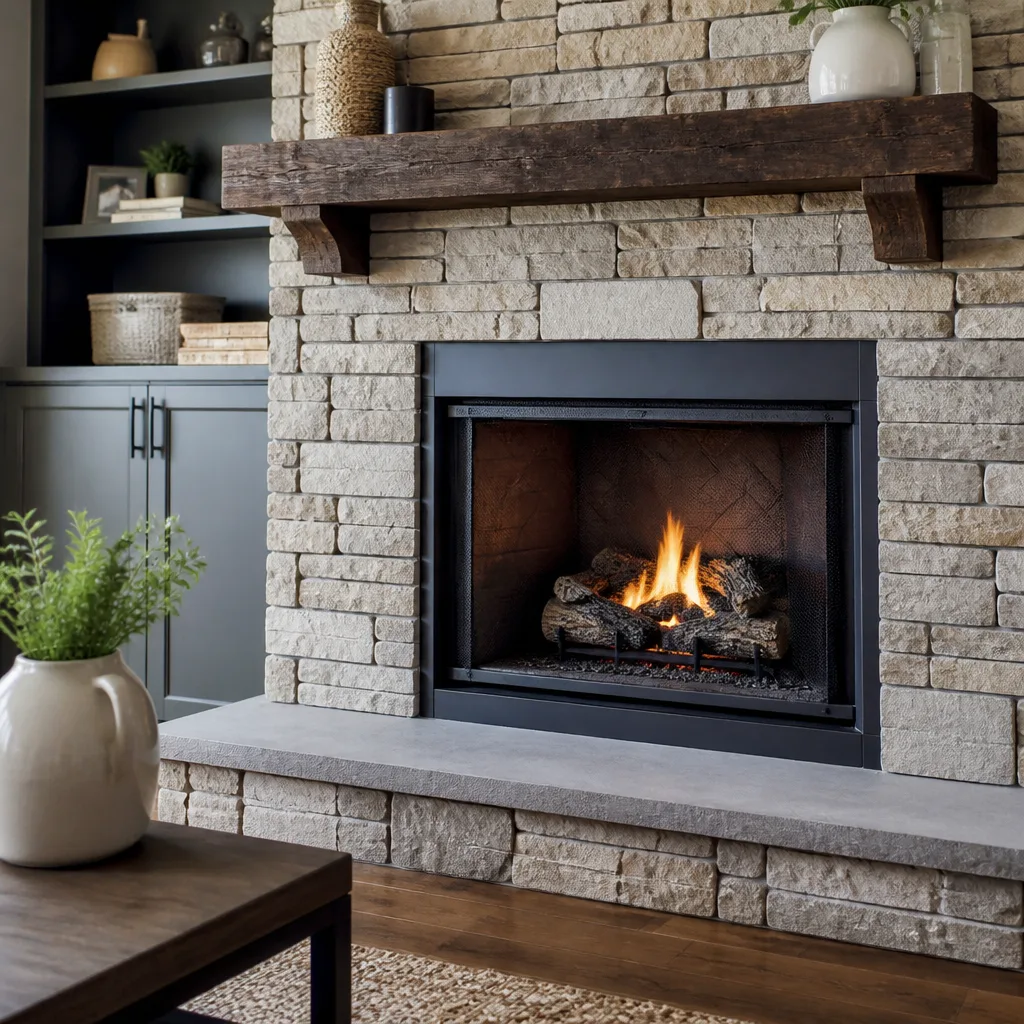
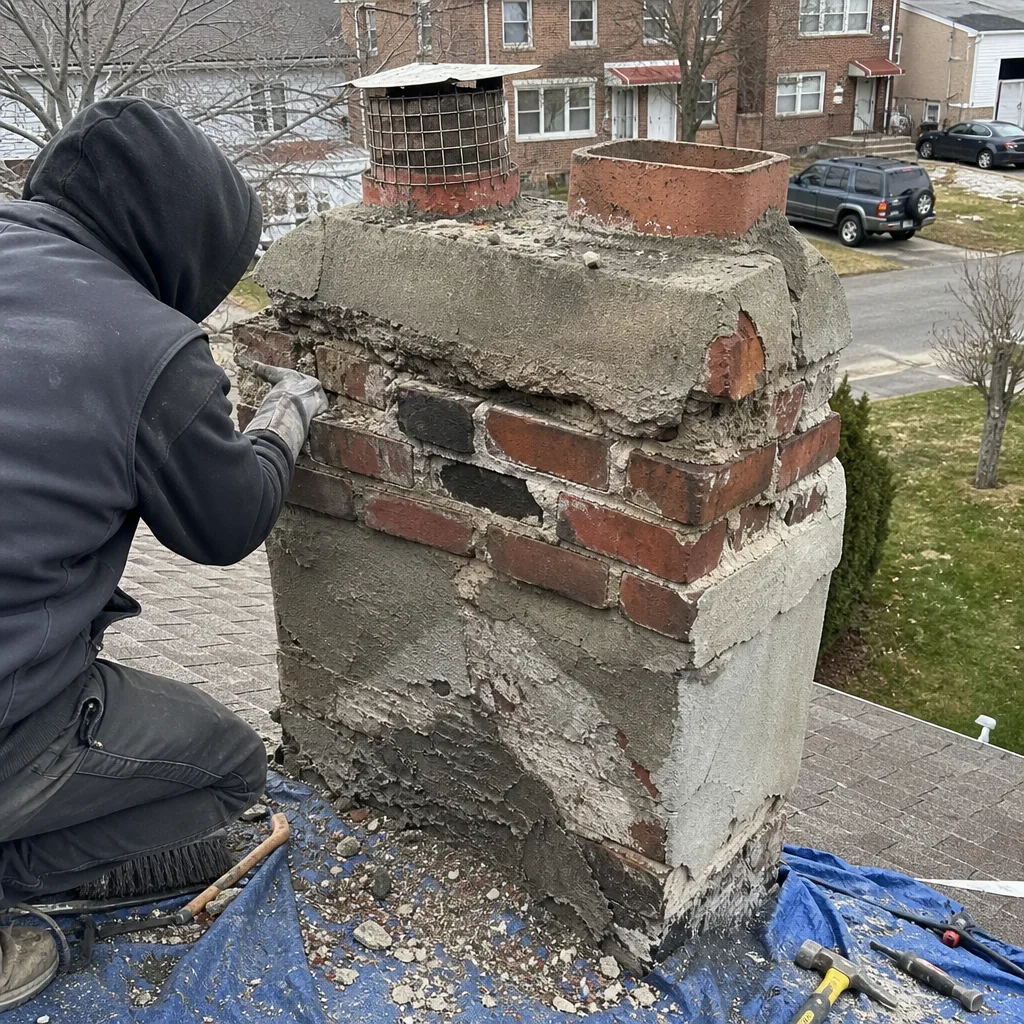
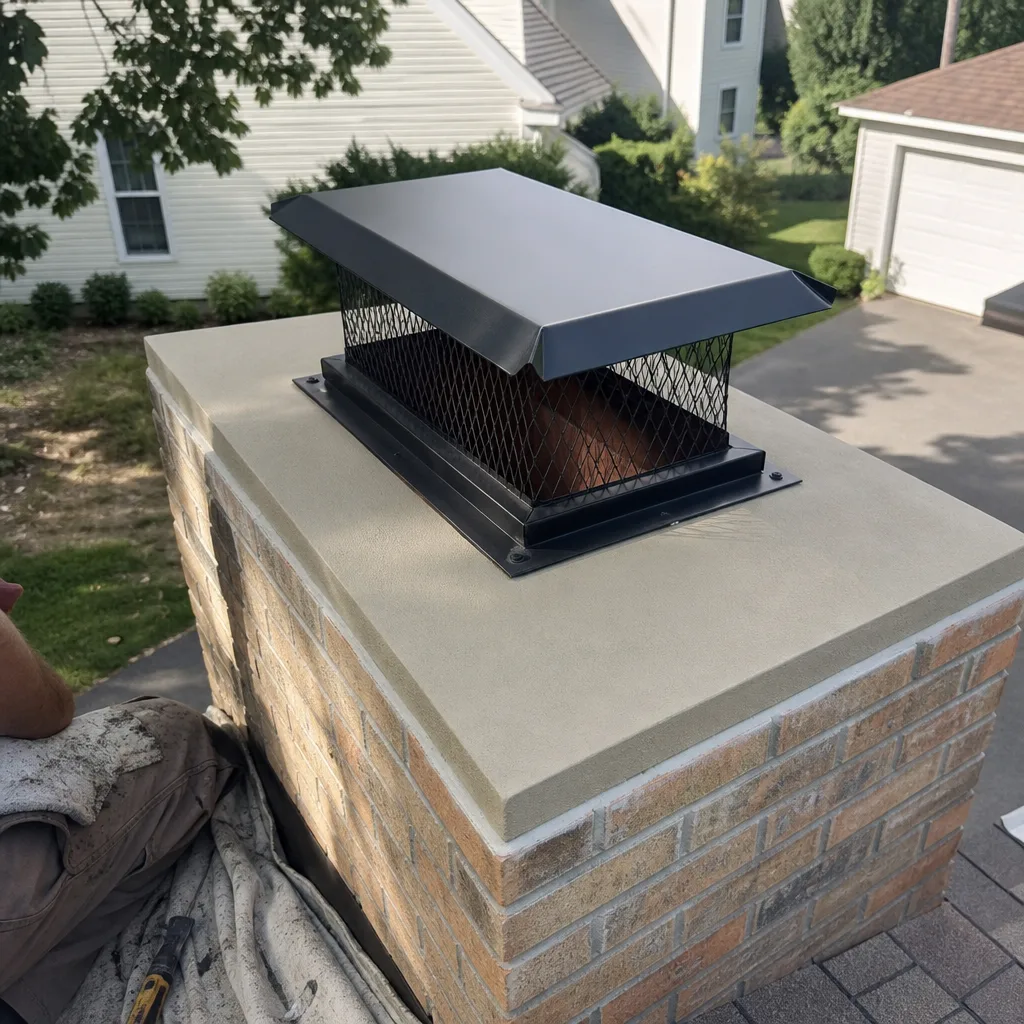
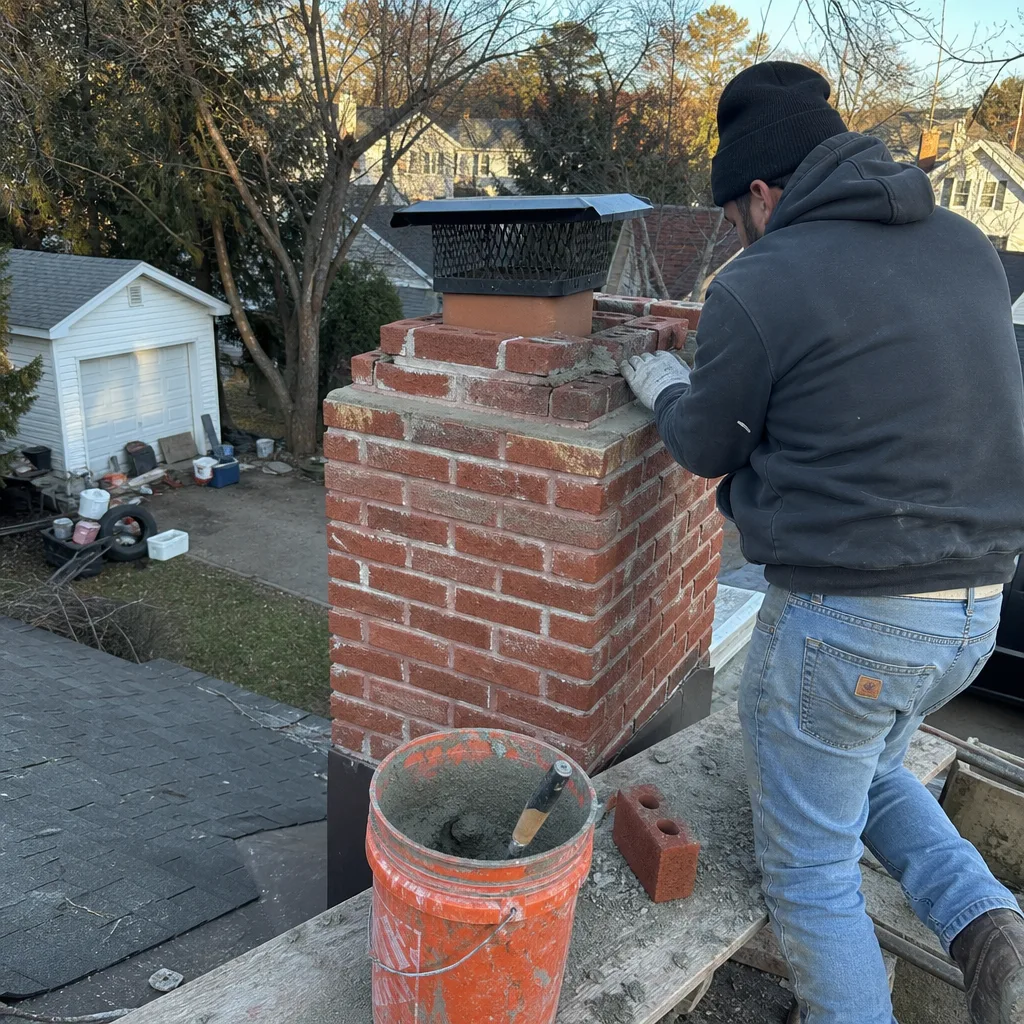
Level 1 sweep and inspection to the NFPA 211 annual standard - flue, crown, cap, and flashing checked and photographed
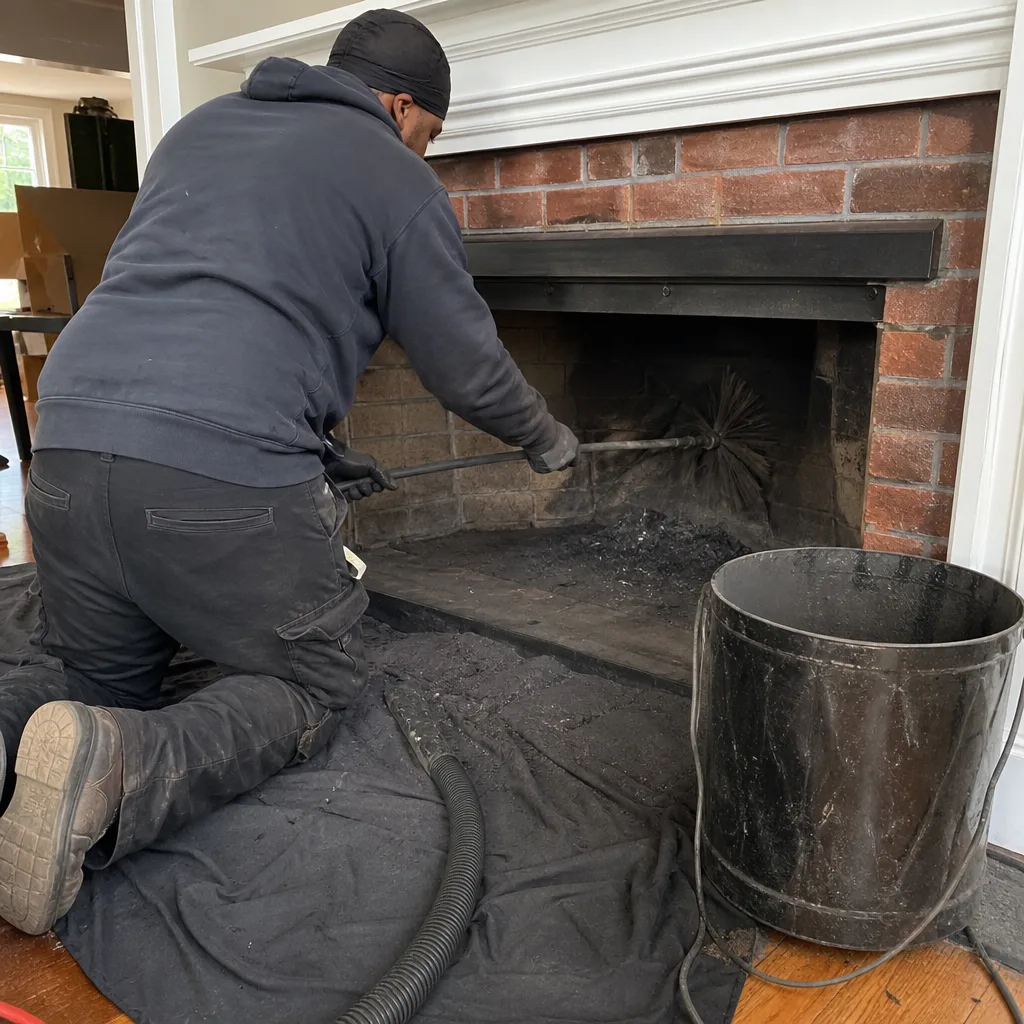
Chimney sweep logs do not sweep chimneys. They loosen some creosote - which then falls where a brush and vacuum still have to collect it.
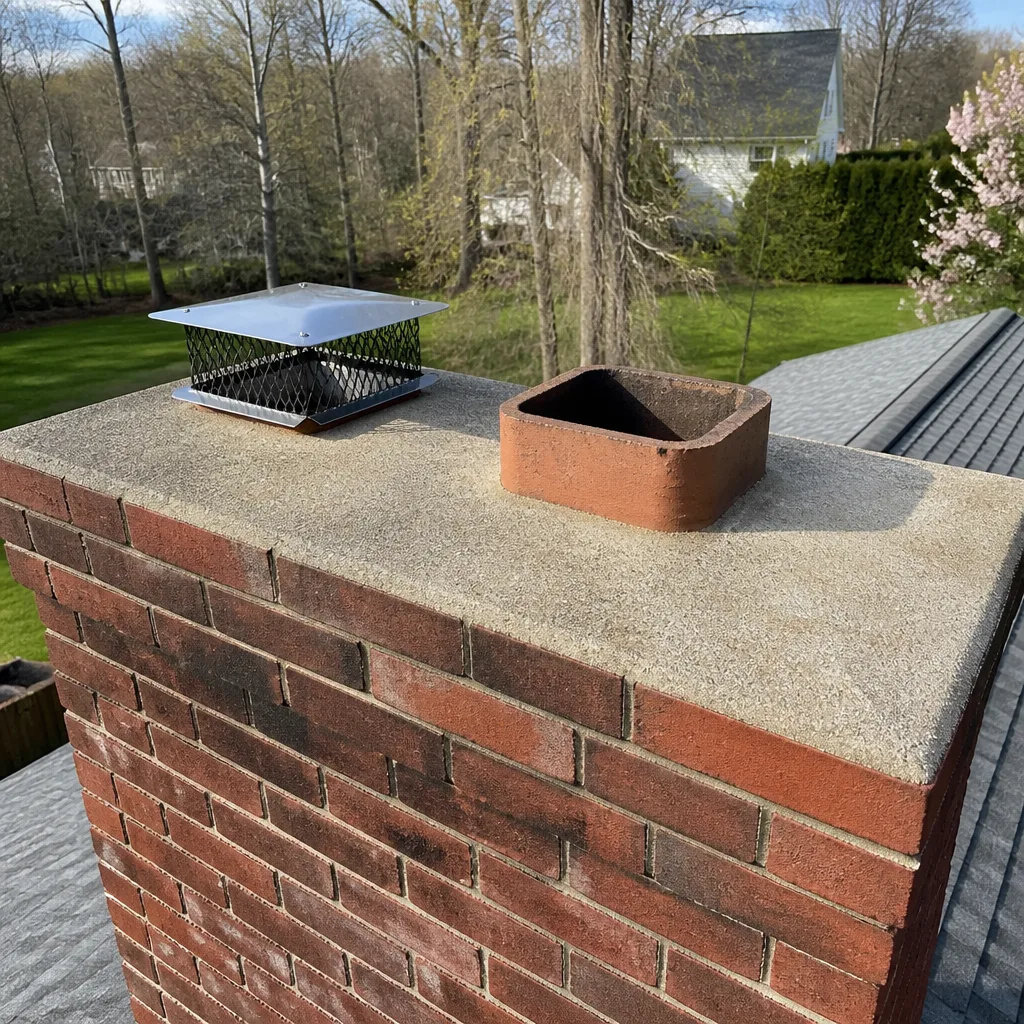
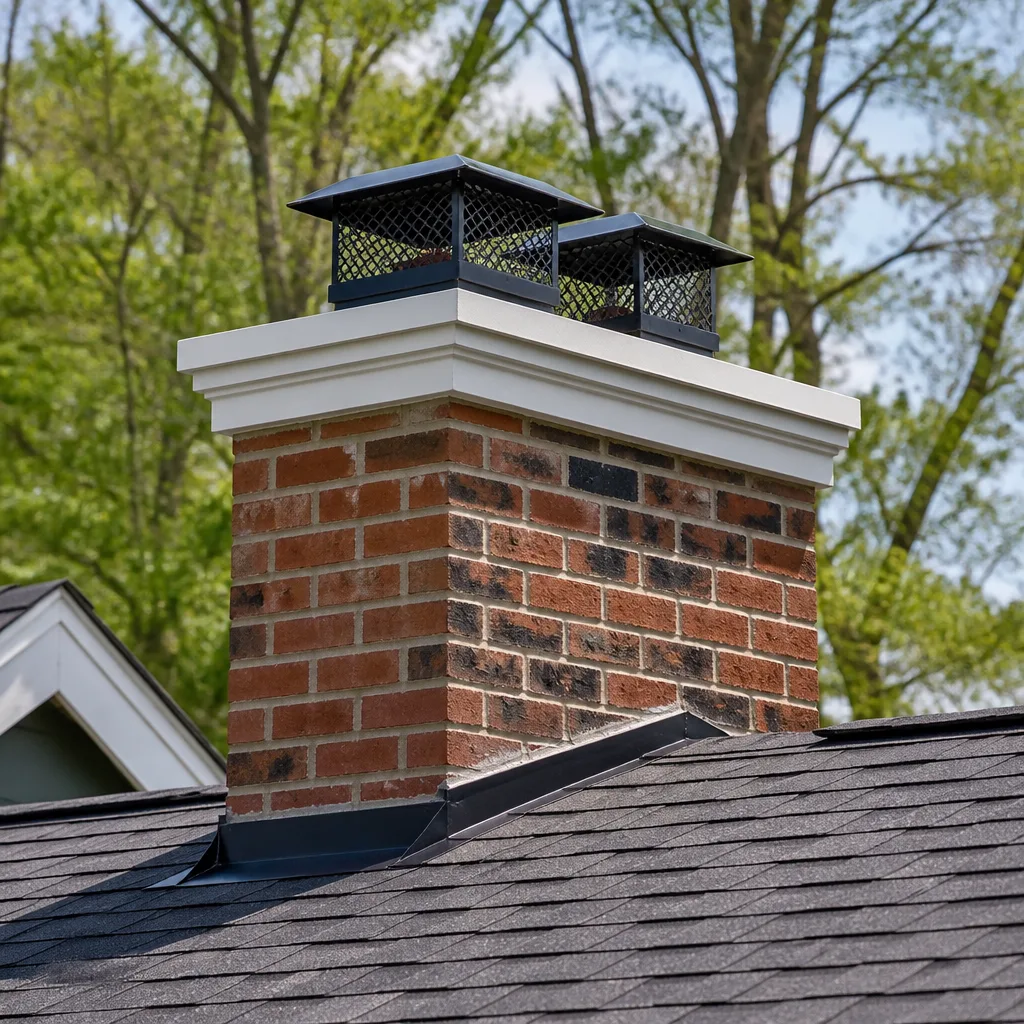
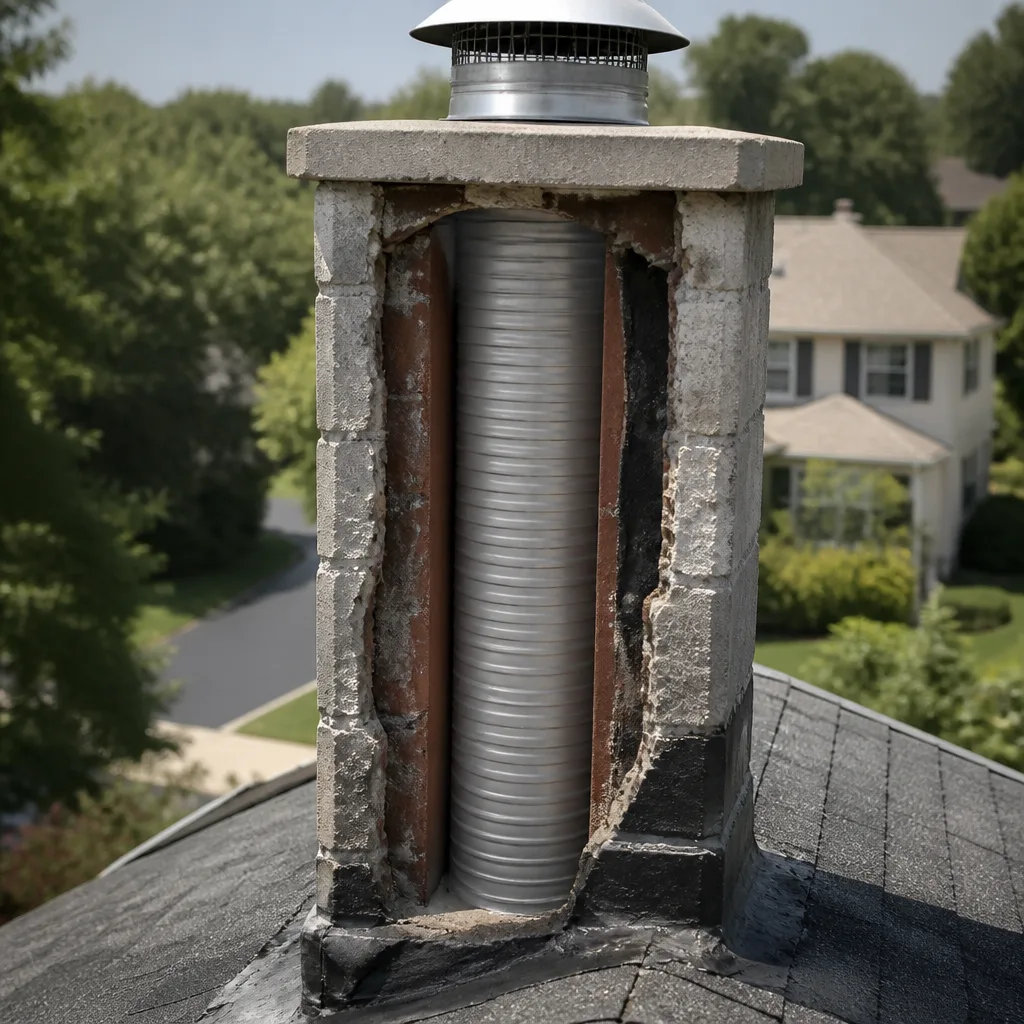
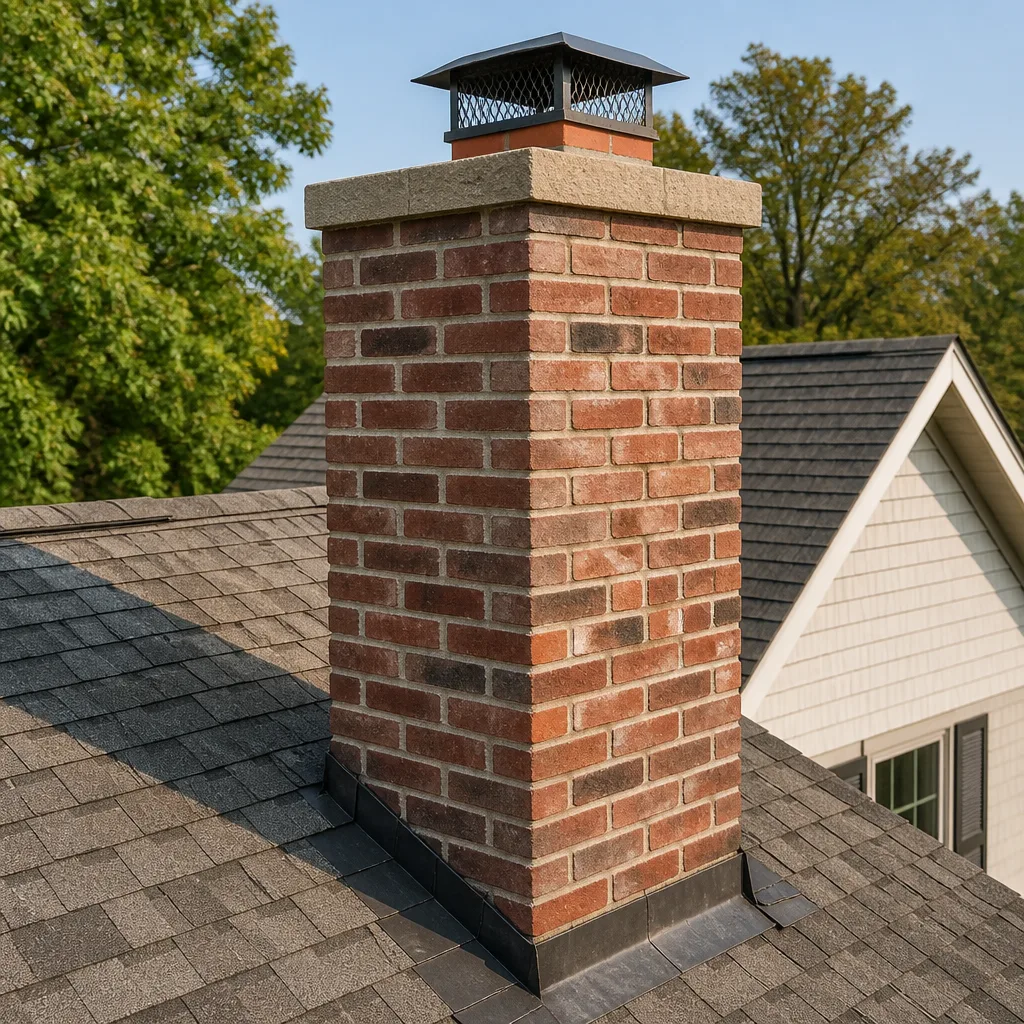
 Before
 After
After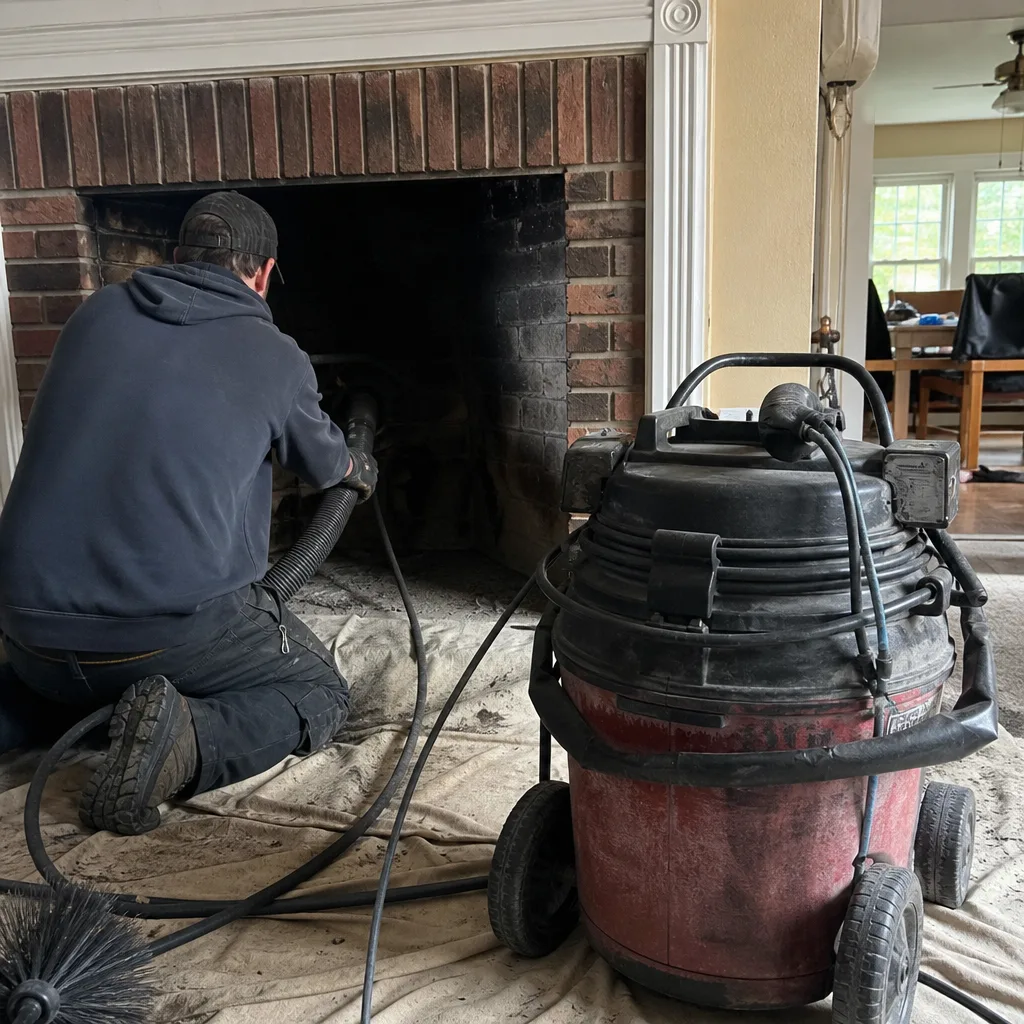 Before
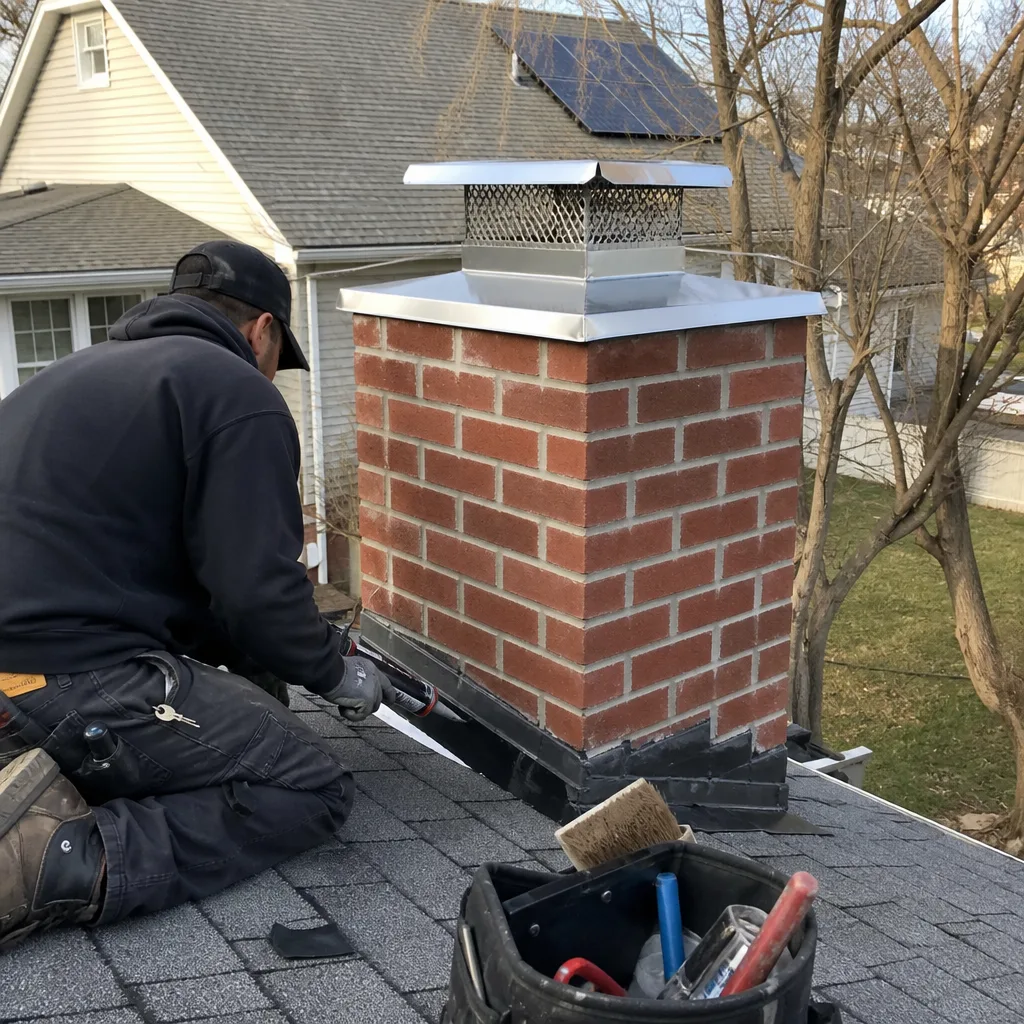 After
After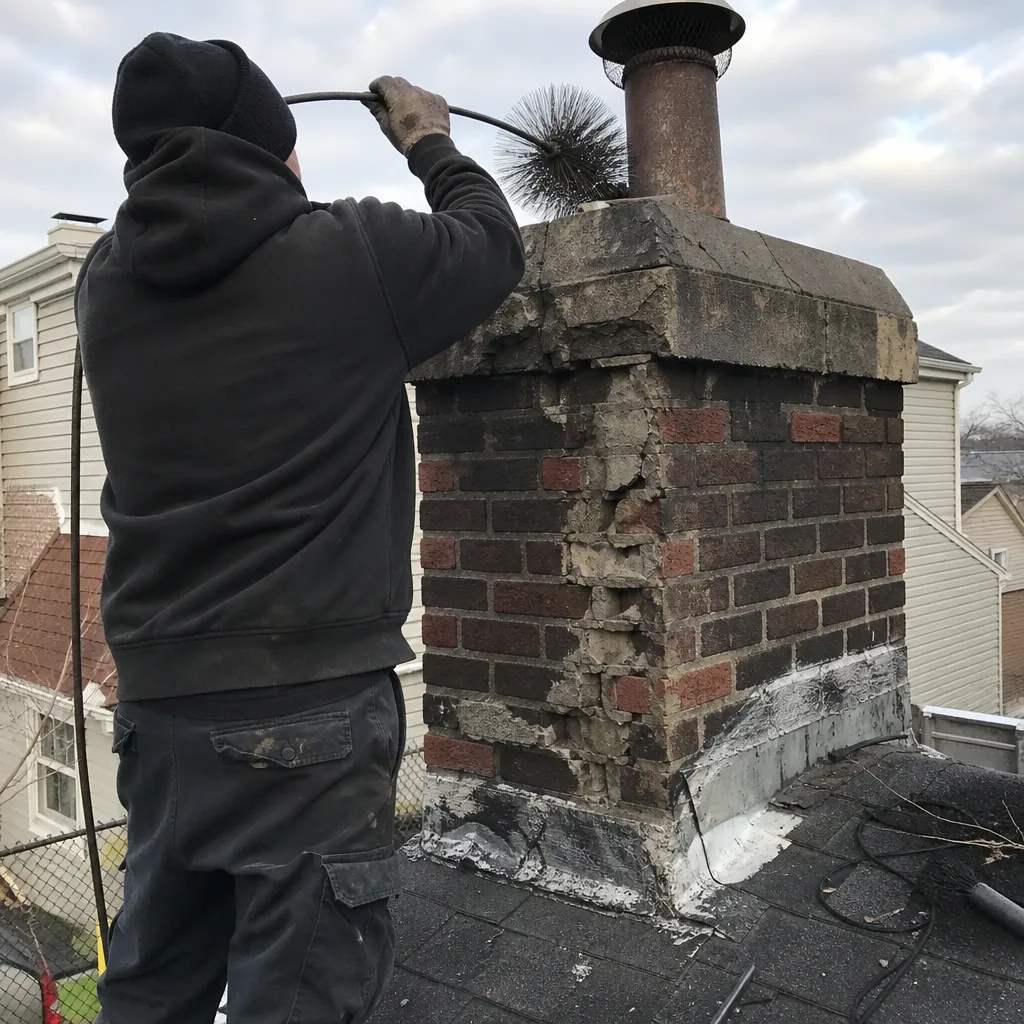 Before
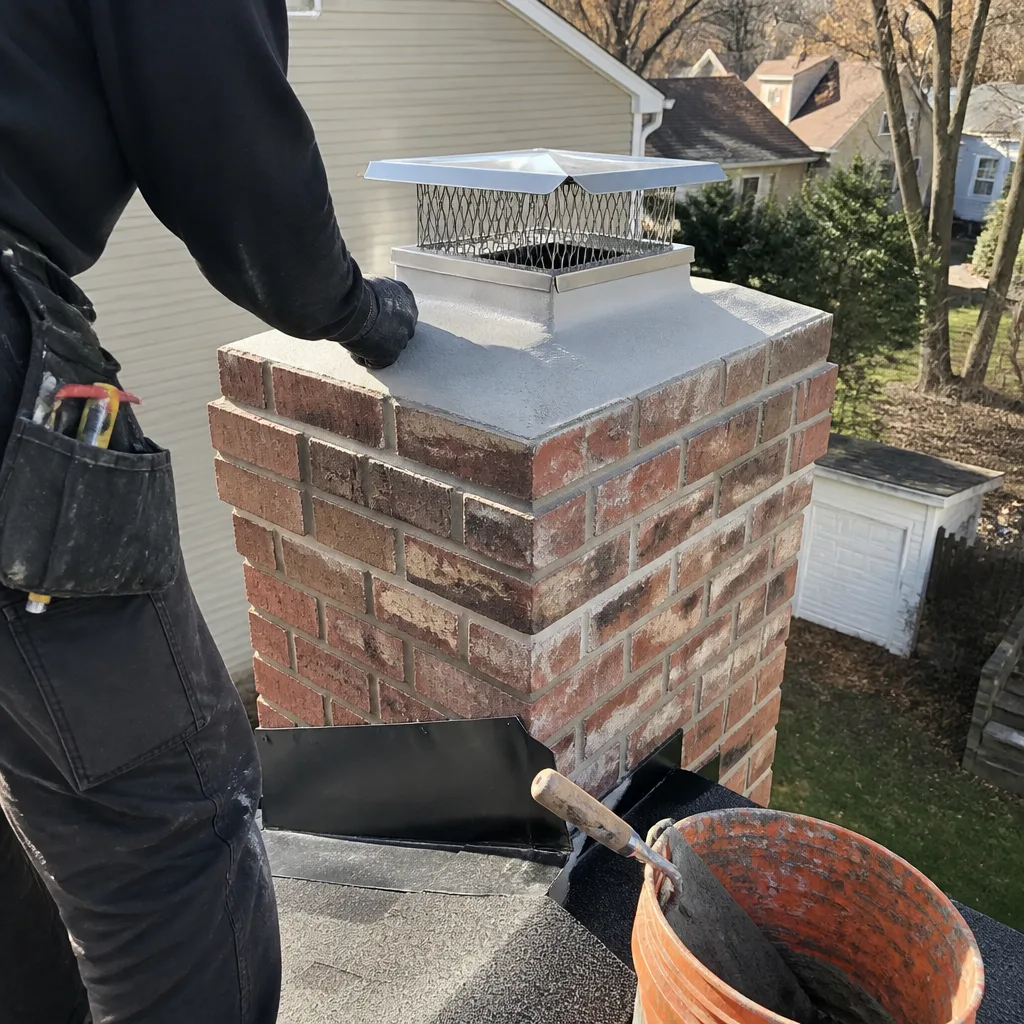 After
AfterChimney Cleaning Warning Signs: A Camden Homeowner’s Reference Guide
A dark stain on the ceiling above your firebox isn’t a cosmetic issue. It’s the chimney’s way of telling you that something upstream has already failed, and a cleaning brush alone won’t fix it. In Camden, where the housing stock runs heavy with pre-1950 construction and freeze-thaw cycles punish masonry from November through March, the warning signs that matter most often show up inside your living room, not at the roofline. This guide maps what to look for, where to find it, and which signs mean you should stop using the fireplace tonight. For a deeper dive into proper maintenance, see our Complete Guide to Chimney Cleaning in Camden.
Quick Answer
The most critical chimney cleaning warning signs visible inside a Camden home are: smoke smell when the fireplace is unused (indicating creosote buildup or downdraft), white efflorescence on interior masonry (active moisture intrusion), rust on the damper plate (condensation damage), and dark ceiling stains above the firebox (leaking flue gases or water). Exterior grade, look for white staining on brick, gaps at flashing lines, and a chimney cap sitting at an angle. Stage 3 glazed creosote requires immediate professional treatment before any brushing can safely remove it.
Table of Contents
- Interior Warning Signs by Location
- Exterior Warning Signs Visible from Grade
- Creosote Stages: What the Buildup Is Telling You
- Camden’s Older Housing Stock: Special Risks
- When to Stop Using the Fireplace Immediately
- How Often Should a Camden Chimney Be Swept?
- What Chimney Cleaning Costs in Camden
- Common Mistakes to Avoid
- When to Call a Professional
- Frequently Asked Questions
 Before
 After
AfterInterior Warning Signs by Location
The signs that matter most are the ones you can check without a ladder. We’ve completed more than 38,000 chimney inspections since 2009, and the calls that start with “something doesn’t smell right” or “there’s a stain on the ceiling” are the ones that uncover active problems. Here’s where to look and what each sign means.
Firebox: The White Residue Test
White, powdery residue on the firebrick is efflorescence, salt deposits left behind when moisture moves through masonry and evaporates. In Camden, this is common in homes near the Delaware River where humidity runs high, and in any house with a missing or damaged chimney cap. The moisture is carrying dissolved minerals out of the brick; the brick itself is being slowly degraded.
Cracked firebrick is equally telling. Small hairline cracks from thermal cycling are normal, but gaps wider than a nickel, or bricks that have shifted out of plane, mean the firebox is no longer containing heat and combustion gases as designed. We’ve replaced fireboxes in Cramer Hill and Whitman Park where the homeowner reported “it just doesn’t seem to heat the room like it used to.” The heat was escaping through gaps, and in some cases, into the wall cavity.
Rust on the damper plate is a condensation signature. When warm, moist flue gases cool before exiting (often because of oversized flues, poor draft, or blockages), water vapor condenses on the metal damper. Rust means this has been happening repeatedly. A damper that won’t open fully, or that chatters when moved, often has rusted pivot pins. We document this with photos under Haven Standard Clause 4; the customer sees exactly what we see.
Living Room: The Nose Knows
A smoke smell when the fireplace hasn’t been used in weeks is not normal. It indicates one of three conditions: creosote buildup substantial enough to off-gas at room temperature, a downdraft pulling exterior air (and chimney odors) into the house, or a partial blockage preventing normal venting. In Camden’s tighter row-home construction, negative pressure from exhaust fans and HVAC systems frequently exacerbates downdraft issues.
Efflorescence on interior masonry surrounding the fireplace, the wall adjacent to the chimney chase, signals water is moving through the structure. This is distinct from simple humidity; it’s water finding a path, often at the roofline or through failed crown mortar, then traveling down the chase. We’ve traced interior efflorescence in Cooper Grant back to cricket flashing that had separated by less than an inch. The water traveled eight feet down the chase before showing.
Ceiling: The Stain That Means Stop
Dark staining on the ceiling directly above the firebox, or running along the line of the chase wall, is the most serious interior warning sign. It can indicate flue gas leakage (carbon monoxide and combustion byproducts escaping through a breach in the flue liner), or active water intrusion that has saturated insulation and begun affecting drywall. Either condition warrants stopping fireplace use immediately and scheduling a Level 2 inspection with camera documentation.
In our experience, ceiling stains in Camden homes cluster in two construction eras: pre-1920 houses with original unlined brick flues where mortar has eroded, and 1960s-1980s construction with original clay tile liners that have cracked from thermal shock or settlement. The camera scan reveals what the stain only suggests.
Exterior Warning Signs Visible from Grade
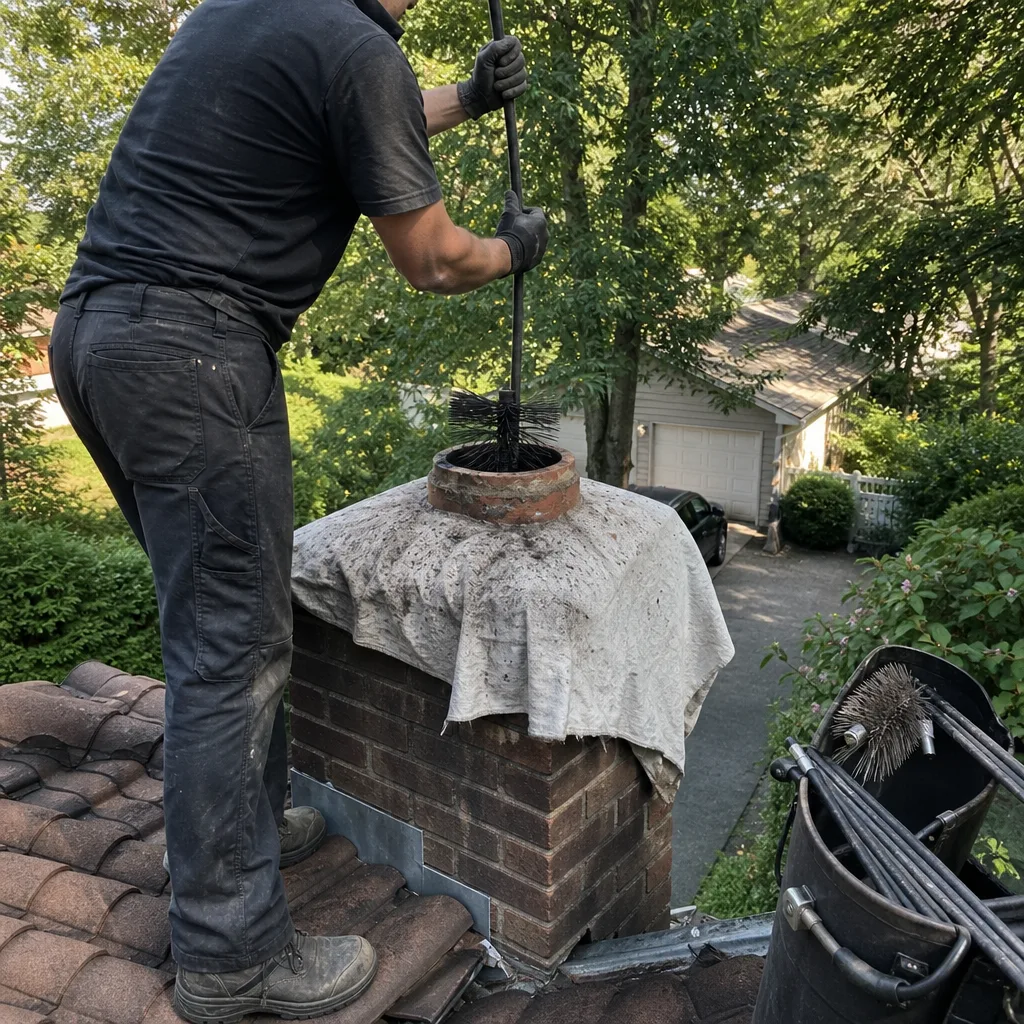
You don’t need to climb to assess your chimney from outside. Several critical warning signs are visible with binoculars or even careful observation from the ground.
White Staining on Brick (Efflorescence)
White crystalline deposits on exterior brick, particularly on the upper third of the chimney, indicate active water movement through the masonry. Camden’s freeze-thaw cycle accelerates this: water enters porous brick or failed mortar joints, expands when frozen, and widens the pathway for more water. The white salts are evidence of the chemistry at work. Left unaddressed, this leads to spalling (surface flaking of the brick face) and structural degradation.
We’ve documented advanced spalling in Bergen Square and Lanning Square where efflorescence had been visible for multiple seasons. The homeowners assumed it was “just weathering.” By the time we inspected, individual bricks had lost 1/4 to 1/2 inch of face material, and partial rebuild was necessary.
Gaps at the Flashing Line
The intersection where the chimney passes through the roof plane is the most leak-prone detail in residential construction. From the ground, look for lifted shingle tabs, visible gaps between step flashing and brick, or caulk that has separated from either surface. In Camden, where many roofs have been reshingled without proper chimney flashing integration, this is a frequent find.
A proper cricket (a small roof structure that diverts water around the chimney on the upslope side) is required by code for chimneys wider than 30 inches. Many older Camden homes lack crickets entirely, or have crickets that were improperly flashed during later roof work. Water ponds behind the chimney, finds an entry point, and begins the interior damage cycle.
Crown Condition and Cap Position
The concrete crown at the chimney top should overhang the brick by at least 2 inches on all sides, with a drip edge underneath to shed water clear of the wall. Visible cracks in the crown surface, especially those that run through to the edge, allow water directly into the chimney structure. From the ground, you may see missing chunks of crown material, or a crown that appears to have settled lower on one side.
A chimney cap sitting at an angle, or one that appears to have shifted from its original position, often indicates crown deterioration underneath. The cap needs a sound surface to mount to. We’ve removed caps in East Camden to find the crown beneath had eroded to the point that the mounting bolts were loose in crumbling concrete.
Mortar Joint Condition
Receded or missing mortar between bricks, particularly at the top few courses, allows water directly into the wall. This is called tuckpointing failure. From grade, look for mortar joints that are visibly narrower than others, or where the mortar has eroded to a concave profile below the brick edges. In Camden’s older stock, original lime mortar has often been repointed with Portland cement, which is harder and less permeable; the brick then erodes instead of the mortar, causing more damage.
Creosote Stages: What the Buildup Is Telling You
Creosote is not a single substance. It accumulates in three distinct stages, and the stage determines both the fire risk and the cleaning method required. Understanding the difference helps you interpret what you’re seeing and what a sweep should cost.
Stage 1: Soot and Fine Ash
Stage 1 creosote is a light, dusty layer that brushes away readily with standard chimney brushes. It indicates relatively clean burning, adequate draft, and regular maintenance. If you open the damper and see a fine black coating that wipes off on your finger, you’re likely at Stage 1. This is normal and expected between annual sweeps.
Stage 2: Crunchy, Flaky Deposits
Stage 2 creosote has begun to condense into harder, more adherent layers. It may appear as crunchy black flakes that break away in pieces. This stage indicates cooler flue temperatures, possibly from burning unseasoned wood, restricted air supply, or an oversized flue that allows gases to cool before exiting. Stage 2 requires more aggressive mechanical brushing, and the sweep will take longer. We document the stage in every photo record under Haven Standard Clause 4.
Stage 3: Glazed Creosote
Stage 3 glazed creosote is a hard, glossy, tar-like coating that has been baked onto the flue surface through repeated heating and cooling cycles. It cannot be removed with brushing alone. Attempting to brush through Stage 3 creosote risks igniting it, a documented cause of chimney fires. The standard treatment requires chemical pre-treatment (spraying a creosote-modifying agent that softens the deposit over 24-48 hours), followed by mechanical removal.
In Camden, we see Stage 3 most often in two scenarios: homeowners who burn exclusively softwoods like pine (common in the area due to cost and availability), and in older fireplaces with oversized flues that were never properly matched to the firebox opening. The latter is a design issue in pre-1950 construction that we address separately.
The cost difference is substantial. Stage 1-2 sweeping in Camden typically runs $200-$280. Stage 3 treatment adds chemical application and a return visit, bringing the range to $350-$500 depending on flue height and accessibility.
| Creosote Stage | Appearance | Removal Method | Typical Cost in Camden |
|---|---|---|---|
| Stage 1 | Fine soot, wipes off | Standard brush sweep | $200-$280 |
| Stage 2 | Crunchy flakes | Mechanical brushing | $250-$320 |
| Stage 3 | Hard, glossy, tar-like | Chemical pre-treatment + mechanical removal | $350-$500 |
Camden’s Older Housing Stock: Special Risks
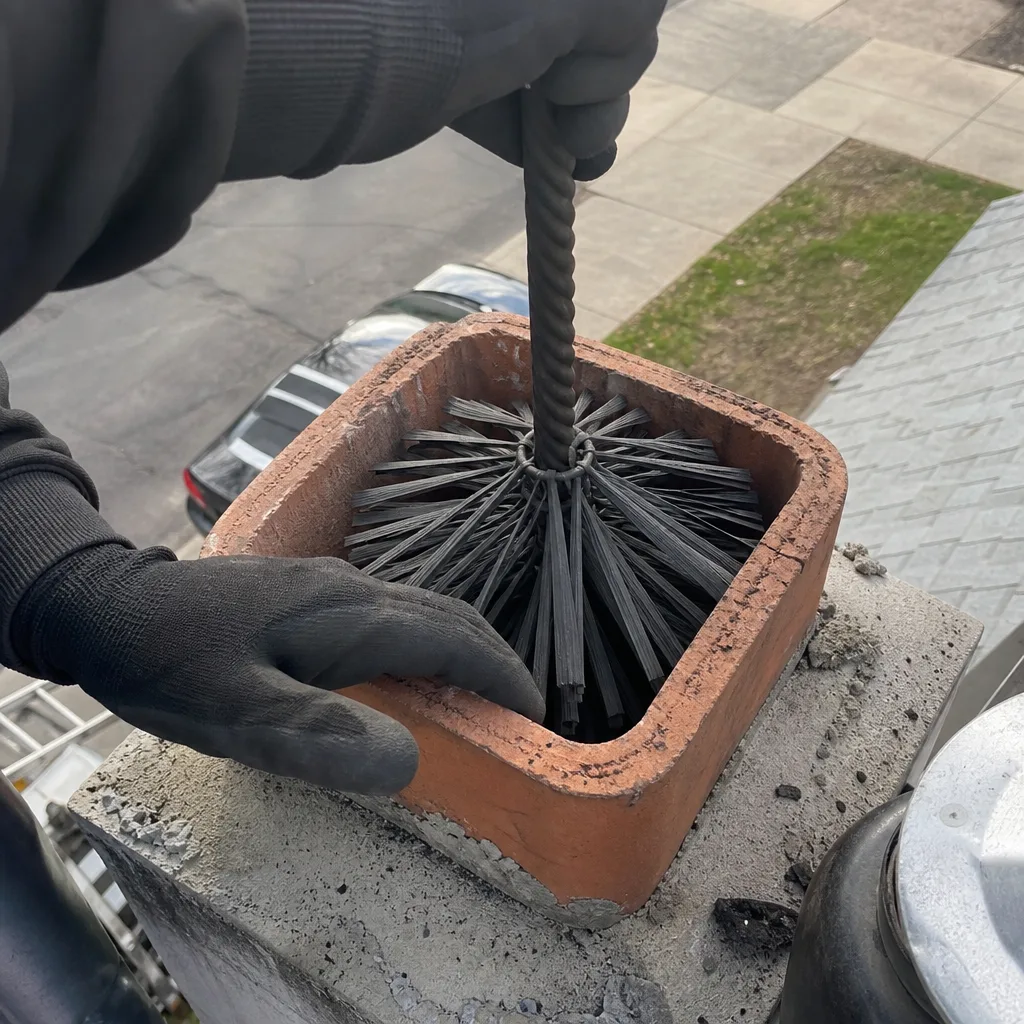
Camden’s housing market includes significant pre-1950 construction, particularly in neighborhoods like Cramer Hill, Whitman Park, and the area around Farnham Park. These homes have chimney characteristics that create distinct warning sign profiles.
Unlined or Partially Lined Flues
Many pre-1920 homes were built with brick flues that were never lined with clay tile, stainless steel, or cast-in-place material. The mortar between bricks erodes with heat and acid exposure, creating gaps where flue gases can escape into wall cavities. Warning signs include smoke odor in upstairs rooms, unexplained soot accumulation on mantel surfaces, and the most serious: carbon monoxide detector activation.
We’ve found original unlined flues still in service in Camden homes that have changed hands three times since 2009, with no documented inspection. A Level 2 camera scan is the only way to assess liner condition in these chimneys; visual inspection from the firebox or roof is insufficient.
Clay Tile Debris in the Firebox
Pieces of clay tile, ranging from gravel-sized fragments to larger shards, in the firebox or ash dump indicate liner failure. Clay tile liners crack from thermal shock (rapid temperature change, like starting a fire on a very cold day), settlement of the chimney structure, or impact from chimney swift nesting material removal. Each cracked tile exposes the surrounding masonry to direct flue gas contact and heat.
The appropriate repair is typically a stainless steel liner installation, using materials from DuraFlex or Olympia Chimney, sized precisely to the appliance being vented. We source through Haven’s buying network to keep pricing transparent and document the full liner run with photos before and after.
Smoke Rollout from Undersized Flues
Pre-1950 fireplaces were often built with firebox openings much larger than modern standards would allow for the flue size above them. The ratio of firebox opening to flue area determines draft performance. When the opening is too large relative to the flue, combustion gases spill into the room instead of rising. This is smoke rollout, and it’s dangerous: it carries carbon monoxide and partially burned particles into living space.
Warning signs include smoke entering the room when the fire is first started (before the flue has warmed), smoke staining on the mantel or surround, and a persistent smell of smoke even when the fireplace is drafting properly. The correction may involve reducing the firebox opening with a smoke guard, or installing a properly sized insert with its own liner system.
Post-War Construction: Transitional Issues
Homes built 1950-1980 in Camden’s expanding neighborhoods like Dudley and Liberty Park often have clay tile liners that have reached end of service life. These liners were typically 5/8-inch thick and have endured 40-70 years of thermal cycling. Warning signs are subtle: slightly longer time to establish draft, more frequent need for sweeping, or minor smoke spillage on cold starts. The camera scan reveals tile fractures, mortar joint gaps, or tile shifting that visual inspection misses.
When to Stop Using the Fireplace Immediately
Some warning signs permit continued use with a scheduled inspection. Others mean the fireplace should not be used again until a professional has assessed and cleared the system. The distinction matters for safety.
Stop using immediately and call for inspection:
- Carbon monoxide detector activation near the fireplace or in an upstairs room served by the chimney
- Visible flames or glowing material anywhere other than the firebox (chase wall, ceiling, attic access)
- Dark, oily stains on ceiling drywall above the firebox, indicating active flue gas or water breach
- Bricks or mortar falling into the firebox from above
- Strong smoke odor combined with headache or nausea symptoms in occupants
- Chimney fire evidence: loud roaring or crackling from the chimney, dense smoke from the top, or a glowing chimney exterior
Schedule inspection promptly, but continued use is acceptable with caution:
- Stage 1 or Stage 2 creosote visible during routine firebox check
- Minor efflorescence on exterior brick without accompanying spalling
- Damper operation stiff but functional
- Smoke smell limited to immediately after fireplace use, dissipating within hours
- Chimney cap slightly askew without visible crown damage
The dividing line is combustion safety versus maintenance scheduling. When there’s any possibility that carbon monoxide or uncontrolled fire could enter the living space, the fireplace stays off until documented clear.
How Often Should a Camden Chimney Be Swept?
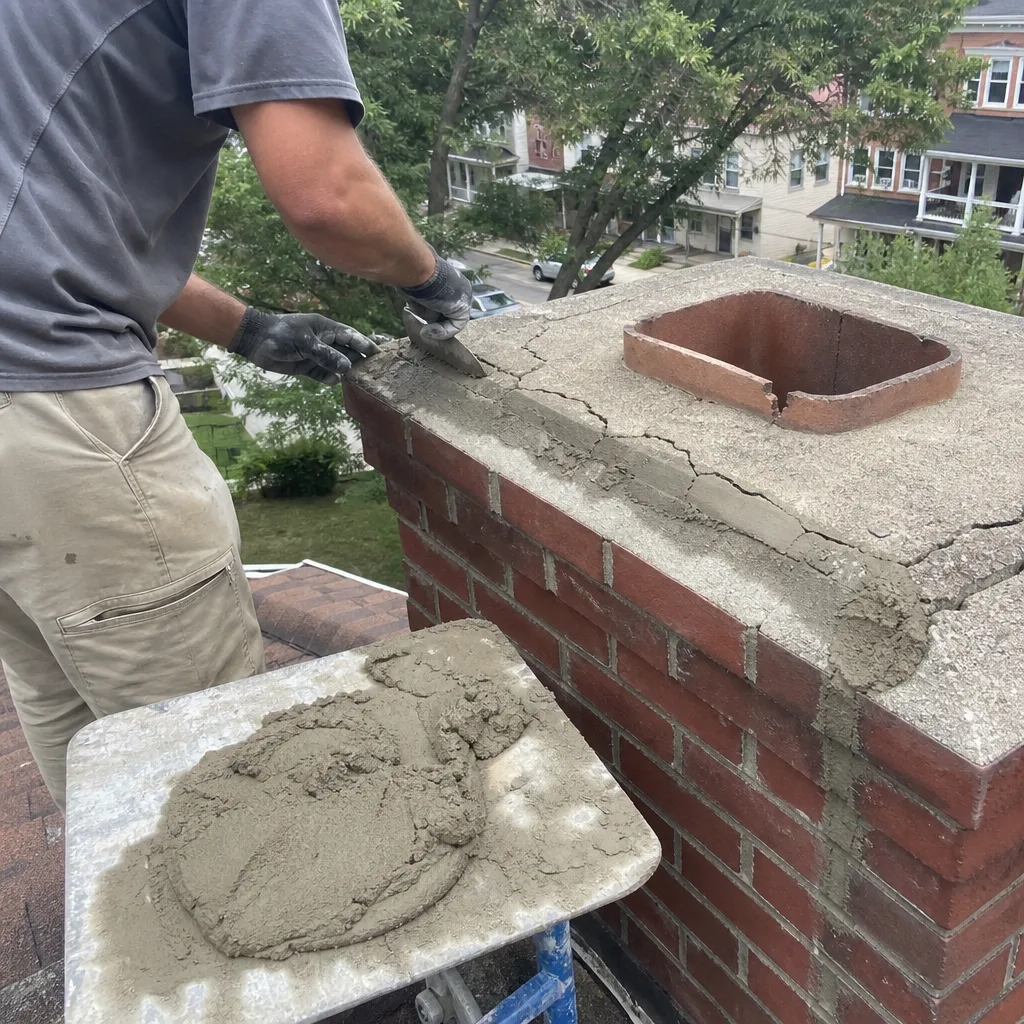
The National Fire Protection Association Standard 211 recommends annual inspection, with cleaning as needed based on creosote accumulation. For Camden specifically, we adjust this guidance based on burning habits and construction era.
For homes burning wood as primary heat (more common in Camden’s older stock with marginal central heating), sweeping is typically needed every cord of wood burned, or annually, whichever comes first. A cord is a stack 4 feet by 4 feet by 8 feet. Most Camden households burning decorative fires consume 1/2 to 1 cord per season; primary heat users may burn 3-5 cords.
For gas log sets in original masonry fireplaces, annual inspection is still warranted. Gas burns cleaner but produces moisture and can reveal liner deterioration that would affect future wood burning or conversion. We inspect gas installations with the same camera documentation standard.
For unlined or partially lined chimneys, we recommend inspection regardless of use frequency. The absence of a liner means the masonry itself is the containment system, and its condition degrades with time as well as use.
What Chimney Cleaning Costs in Camden
We publish pricing because a written price before work starts is Haven Standard Clause 1. For more guides & resources on chimney care and home safety, visit our blog. Here’s what chimney cleaning and related services cost in the Camden market, based on our 38,000+ jobs since 2009.
| Service | What’s Included | Price Range in Camden |
|---|---|---|
| Level 1 Sweep and Inspection | Visual inspection, brush sweep of accessible flue, basic condition report | $175-$240 |
| Level 2 Camera Inspection with Sweep | NFPA 211 Level 2 scan, full video/photo documentation, brush sweep, written report with findings and recommendations | $280-$380 |
| Stage 3 Creosote Treatment | Chemical application, 24-48 hour dwell, return visit for mechanical removal, documentation | $350-$500 |
| Stainless Steel Liner Installation | Custom-measured liner from DuraFlex or Olympia Chimney, proper sizing to appliance, insulation as required, installation and documentation | $2,800-$4,500 |
| Crown Repair or Rebuild | Removal of deteriorated crown, forming and pouring new concrete crown with proper overhang and drip edge | $650-$1,200 |
| Tuckpointing (per square foot) | Grinding failed mortar to proper depth, matching replacement mortar, tooling joints | $18-$28/sq ft |
Every price is delivered in writing before work begins, with scope and warranty documented. We also offer a Free Second Opinion on any competitor’s written estimate. Bring us their quote; we’ll review it against what we find and explain any differences.
Common Mistakes to Avoid
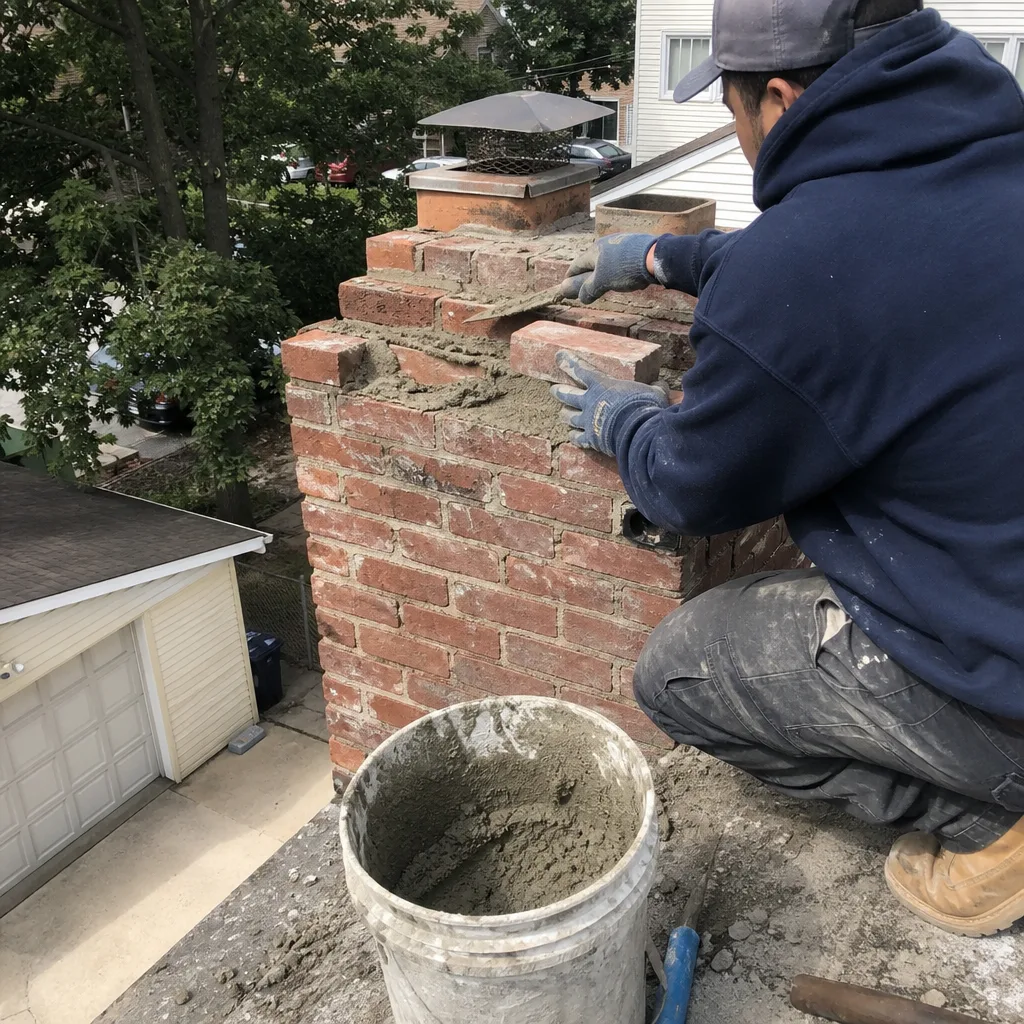
- Assuming no smell means no problem. Carbon monoxide is odorless. A chimney can have dangerous liner deterioration or blockage without any smoke smell. Annual inspection with a CO detector test is the only reliable safeguard.
- Using the fireplace to “burn off” creosote. This is how chimney fires start. Stage 3 glazed creosote ignites at approximately 451°F, and a hot fire can easily achieve this in the flue. Chemical treatment is the correct approach.
- Hiring based on the lowest phone quote. In Camden, we’ve corrected work from sweeps who never ran a camera, never accessed the roof, and “inspected” from the firebox with a flashlight. The NFPA 211 Level 2 standard exists because visual-only inspection misses critical defects.
- Ignoring seasonal timing. Camden’s burning season runs October through March. Scheduling in April or September means better availability and time to complete any needed repairs before cold weather. October callers are often waiting two weeks for an opening.
- Repainting over interior stains without finding the source. The stain is information. Covering it wastes money and delays addressing the underlying flue gas leak or water intrusion that caused it.
- Assuming gas logs don’t need inspection. Gas produces water vapor and can mask liner failure that would be obvious with wood smoke. We’ve found failed liners in gas-only chimneys that would have been hazardous if the homeowner ever converted back to wood.
- DIY creosote removal with hardware store tools. Without camera verification, you cannot confirm the flue is clean or intact. We’ve retrieved broken brush sections and damaged rods from chimneys where homeowners attempted self-cleaning.
When to Call a Professional
Call for a Level 2 inspection when you observe any of the warning signs in this guide, when you’re purchasing a home with a fireplace (demand camera documentation from the seller’s inspector), or when your last inspection exceeds 12 months. In Camden’s climate, with freeze-thaw cycles, river humidity, and aging housing stock, the cost of documented inspection is modest compared to the cost of undetected deterioration.
Level Two Chimney Camden offers free estimates with written pricing before any work begins. Our technicians are background-checked, uniformed, and assigned by name; you’ll receive a text when yours is en route. Every job includes the camera-scan inspection and photo record that became Haven Standard Clause 4 in 2009. Call (856) 741-9572 to schedule, or request your Chimney Cleaning & Sweep in Camden appointment online.
Frequently Asked Questions
A standard chimney sweep with Level 1 visual inspection in Camden costs $175-$240, while a Level 2 camera inspection with full documentation runs $280-$380. Stage 3 creosote treatment, which requires chemical pre-treatment before mechanical removal, ranges from $350-$500. Call (856) 741-9572 for an exact quote based on your chimney’s height, accessibility, and last service date; estimates are free.
An unlined chimney can technically function but is not compliant with modern safety standards and poses documented risks of carbon monoxide intrusion and structural fire. In Camden, we’ve found original unlined flues still in service after 100+ years, but their mortar is often eroded to the point that flue gases escape into wall cavities. A camera scan is the only way to assess whether your unlined flue remains safe; we provide that documentation and a written recommendation, not a sales pitch. If replacement is needed, we install stainless steel liners from DuraFlex or Olympia Chimney with full photo documentation.
The NFPA recommends annual inspection, with cleaning frequency based on creosote accumulation. For Camden homeowners burning wood as supplemental heat, that typically means annual sweeping. Primary wood heat users may need service after each cord burned. Gas fireplace chimneys should be inspected annually even though gas burns cleaner; moisture and liner deterioration still occur. Homes with pre-1950 construction or known liner issues should not skip years regardless of use level.
Skipped maintenance leads to progressive creosote accumulation, which increases chimney fire risk and reduces draft efficiency. In Camden’s older housing stock, it also means undetected liner deterioration, water intrusion that degrades masonry from inside, and eventually costly rebuilds rather than preventive repairs. We’ve documented chimneys where five years of skipped service turned a $280 sweep into a $4,200 liner and crown rebuild. The photo record from regular inspection makes the progression visible; without it, damage advances invisibly.
Smoke odor when the fireplace is unused indicates creosote buildup substantial enough to off-gas at room temperature, or a downdraft condition pulling chimney air into the house. In Camden’s row homes and tighter construction, negative pressure from kitchen exhaust, dryers, and HVAC systems frequently causes downdraft. The solution may be as simple as a top-sealing damper or as involved as correcting the flue-to-firebox ratio. A Level 2 inspection determines which; we don’t guess.
A Level 1 inspection is a visual examination of readily accessible portions of the chimney exterior, interior, and connecting appliances, appropriate for chimneys under continued service with no changes. A Level 2 inspection, required by NFPA 211 when a property changes hands, after a chimney fire, or when any change is made to the system, includes a camera scan of the full flue interior, inspection of attics and crawl spaces where the chimney passes, and written documentation of findings. Level Two Chimney Camden performs Level 2 as our default because flashlight-only inspection misses the defects that matter most; this practice became Haven Standard Clause 4 in 2009.
The Bottom Line
The chimney warning signs that protect Camden homeowners are visible without ladders or specialized equipment: stains on ceilings, rust on dampers, white residue on brick, and smoke smells that persist. The critical skill is knowing which signs permit scheduled inspection and which require stopping use immediately. Document everything with camera verification, get pricing in writing before work starts, and maintain annual inspection frequency appropriate to your burning habits and your home’s construction era. The cost of documented prevention is always lower than the cost of undetected failure.
For chimney cleaning, repair, or inspection in Camden, Level Two Chimney Camden home provides NFPA 211 Level 2 camera documentation on every visit, written pricing before work begins under Haven Standard Clause 1, and the 365-Day Done Right Promise. We also handle Chimney Repair in Camden and Fireplace Services in Camden using materials sourced through Haven’s buying network from trusted manufacturers including Famco and Copperfield.
Written by Corrine Halstead, Owner at Level Two Chimney Camden, serving Camden since 2009.